
Case study:
Eliminating the sore points of sustainable events


Sustainability is high on the agenda for the British Society for Rheumatology (BSR) when planning events.
To respond to members’ renewed expectations of content consumption post-pandemic, tackle potential Covid-19 restrictions, and adjust to the expected lack of study leave for NHS attendees, the Society decided to run its first-ever hybrid annual conference in 2022.
BSR’s flagship annual conference is a key date in the calendar for everyone working in rheumatology to come together, share, learn and network. It brings together over 2,000 health professionals including doctors, nurses, allied health professionals, pharmacists and psychologists from across the UK and beyond to showcase advances in research, science and patient care.
The three-day hybrid event in April 2022 involved a mixture of speakers, exhibitions and poster showcases. It was held in Glasgow and offered more than 80 educational sessions featuring presentations from over 190 speakers.
The aim was to ensure educational content reached members in a sustainable and responsible way, regardless of personal circumstances or ability to take leave or travel. The event was attended by almost 1,250 people, with more than 800 joining online.
Why was the venue chosen?
The venue changes each year to accommodate attendees who travel to the event.
Although the Scottish Event Campus (SEC) in Glasgow was planned pre-pandemic, it was a benefit that it offered plenty of space with Covid-19 secure measures to give delegates the confidence to attend.
SEC Glasgow also has a strong commitment to sustainability as part of its COP26 legacy with a number of sustainable initiatives in place, including food that is local and seasonal, reusable and recyclable packaging, and donating surplus food to charities and the local community.
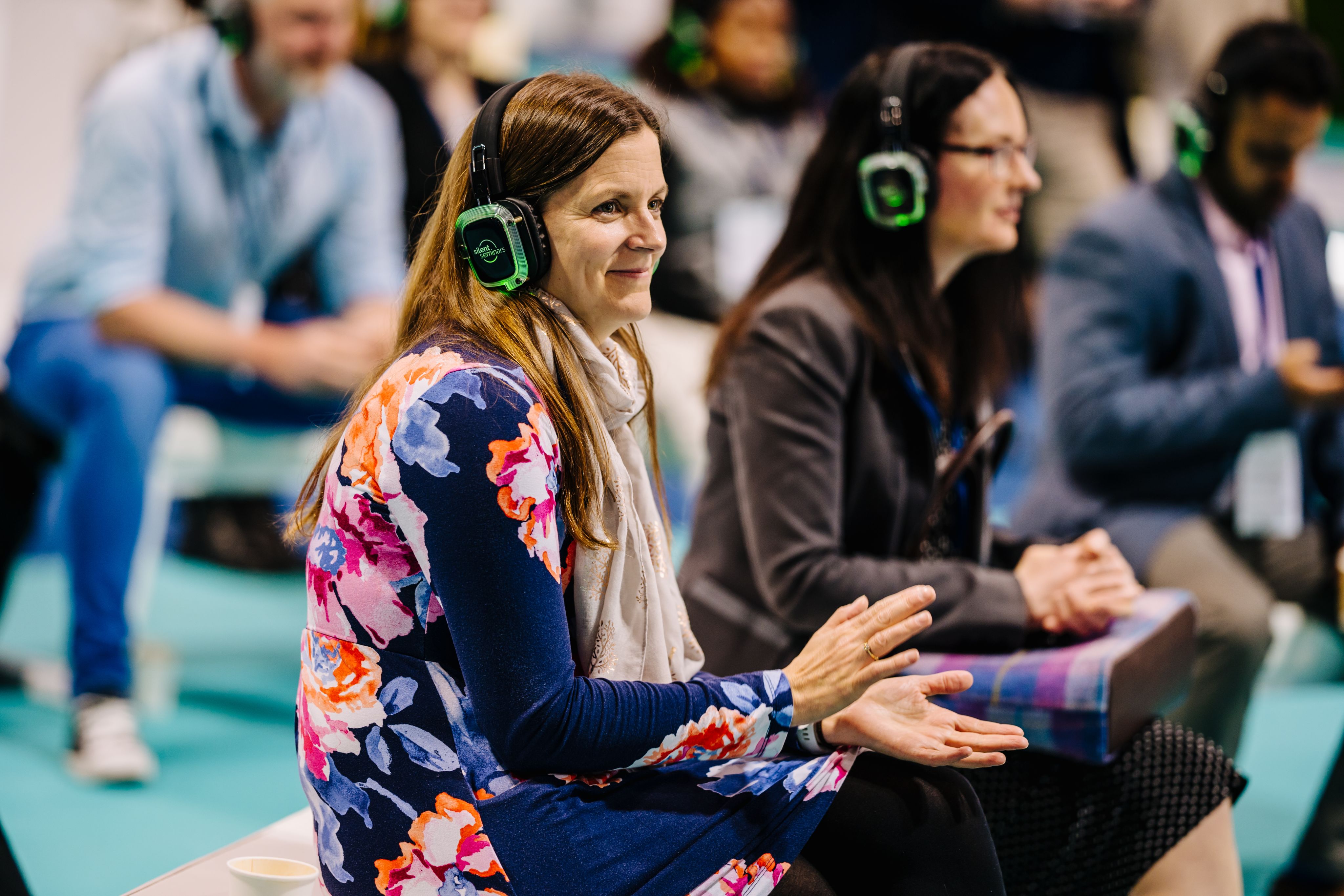
A full online conference programme was offered so people could enjoy talks, take part in interactive sessions and network virtually. The hybrid model meant the event was more accessible and flexible to a wider number of people, as well as lowering the overall carbon footprint.


Scottish Event Campus
Scottish Event Campus

Was there a sustainability focus?
Sustainability forms part of the organisation’s five-year strategy and informs the decisions around event venues and suppliers. Although BSR is at the start of its journey to make more sustainable choices, actions for the 2022 annual conference included:
- The Swapcard technology brought the online and in-person experiences together which meant fewer people travelled to the event.
- Working with the sponsors to encourage them to be sustainable.
- Getting support from the headline sponsor for hybrid delivery.
- Local suppliers were prioritised to reduce the carbon footprint and there were no disposable plastics.
- Selecting sustainable suppliers and working with them to improve the reusability of stands in the exhibition to avoid unnecessary waste.
- All programme and sponsors' content were on the app so that printed collateral and waste for the event were reduced.
- Recommending local hotels that had a focus on green credentials.
- Food contained local ingredients and there was a meat-free day.
What challenges did you overcome?
As this was BSR’s first hybrid event, it was resource-heavy with increased investment in the production and AV systems to ensure those attending online were able to hear and see everything that was happening in the live sessions.
The internet network at the venue was integral to the success and smooth running of the event. The use of the bandwidth was much greater than the use of a traditional event app, so engaging in conversations with the venue IT teams during the initial stages of the planning was crucial. Hybrid events have a higher risk to run technical issues than face-to-face or online-only events. Working closely with the production and venue teams helped to reduce technical issues.



Isabelle Hanley Timmins, events manager at the British Society for Rheumatology.
Isabelle Hanley Timmins, events manager at the British Society for Rheumatology.
Learnings and takeaways from the event
Isabelle Hanley Timmins, events manager at the British Society for Rheumatology, said: “Sustainability is one of our core values and we’re learning how to put this into practice so that all the events we run are greener. We’re now working with event:decision to measure our carbon footprint. We’re using our 2019 conference as a baseline, comparing it to 2022 and coming up with ways we can make a difference for our 2023 event in Manchester.








 Built with Shorthand