
Tote bags, tat and token gestures: has event merch had its day?
Is event merch still a perk, or have we all just become unwilling collectors of branded clutter? A rediscovered leather notebook gets Ellie Evans pondering the good, the bad and the landfill-destined of giveaways.


Picking up a leather notebook given to me by Brisbane Convention & Exhibition Centre more than a decade ago led me to muse on the value of merch. On the one hand, I have a glasses cloth from a Canadian CVB that is the absolute perfect texture and I use it every day. On the other, the countless branded plastic tat I have ditched the minute I left an event as I couldn’t recycle it at home.
Karen Hutchings, former global head of travel, meetings and events at Ernst & Young, AIG and Merrill Lynch, thinks the industry has lost its way: suppliers feel they have to produce merchandise “to get the brand and logo out there, not thinking about whether someone will use the item they’re given or not”, while buyers feel obliged to take things without question.
She suggests suppliers consider donating to charity instead; her own start-up Pioneera has a no-merch pledge, but the team hopes giving to charities instead will create a better bond with buyers.
And she warns against falling into the ‘sustainable merch’ trap: “There has been a shift to not offer so many items, but now people try to have giveaways that are sustainable… but they’re still giveaways! My cupboard is so full of branded water bottles, and you just don’t need it. There is still the desire to give something out and it just feels so wasteful.”
Occasionally, a well-considered high-quality item makes the cut: I’m infatuated with the Lululemon mittens given to me on a winter fam trip, while Karen has used a Swissair travel wallet for 20 years.


Ellie Cashmore
Ellie Cashmore


Joe Harris
Joe Harris
But in today’s climate, it isn’t easy to fund those kind of perks. Or is it?
"Many clients wrongly assume that making sustainable choices is more expensive when in fact, the majority of the time it is more cost-effective," says Ellie Cashmore, marketing and sustainability manager at Blackberry Events. "You tend to find that more consideration and less auto-pilot about what we are giving away at events results in less waste, energy and resource, and it is our duty to educate clients around these benefits."
This even extends to a visitor policy at Blackberry where venues and suppliers are encouraged to bring more people- and planet-friendly gifts or food items to meetings.
Many venues are taking a strong stance themselves, particularly in the capital. "We actively discourage unnecessary collateral and giveaways," says Joe Harris, deputy general manager at 15Hatfields in Central London. "If a client does insist on it, then we would always promote recycled, reusable items that delegates are likely to actually use, rather than throwing away as soon as the meeting or event has finished."
At Church House Westminster, the venue is redirecting 100 per cent of its promotional merchandise budget toward a local charity. "By year's end, what would have been pens, tote bags, and branded items becomes tangible support for our community," says Marina Papadopoulou, head of business development and marketing.
"The merchandise that does resonate tends to be genuinely useful, beautifully crafted, and built to last. But even then, the appetite is declining. People are curating their possessions more carefully, and frankly, most conference bags end up in the back of cupboards."
Michelle Sweetman, marketing & communications director at Goose Live, doesn't think that merch should be outlawed - chargers and power packs still tend to be well received - but agrees there needs to be a more mindful approach. As well as selecting something "that has a long-term usefulness to the audience, can be sourced sustainably, and ideally is meaningful either in the way it reinforces the event or the brand (or both)", she points out the importance of choosing the right supplier who shares the same values – and ensuring that’s reflected in the whole supply chain too.
"We try to never produce anything that is dated or too event-specific which can’t be used again," she says, "and better to order less and create a FOMO among the audience."


Marina Papadopoulou
Marina Papadopoulou

Michelle Sweetman
Michelle Sweetman


Chantal Kerr-Shepherd
Chantal Kerr-Shepherd
Chantal Kerr-Sheppard is co-founder of Event Cycle, which helps to turn used event materials into donations. A previous winner in the Positive Impact/Event Legacy category at the M&IT Awards, in 2024, Event Cycle diverted the equivalent of 16.03 tonnes of CO2 from landfill by repurposing items for 207 charities, community groups, schools, and social enterprises. And she’s all for usefulness.
"I understand you want a reminder of your brand in someone's hand as a marketing touchpoint, but don't you want to give away something that they will use?
“Items like tote bags, stress balls, key rings and water bottles are cheap but they aren't useful. You can't give those away in B2C events now as it's seen as unsustainable, but that still isn't the case for corporate events,” she says, adding that companies have the power to benefit communities – and generate good publicity.
“It’s a huge missed opportunity – if you have to give a gift, engage local organisations near to your event. How can you help a small local business? Is there a social enterprise nearby you can contribute to?"

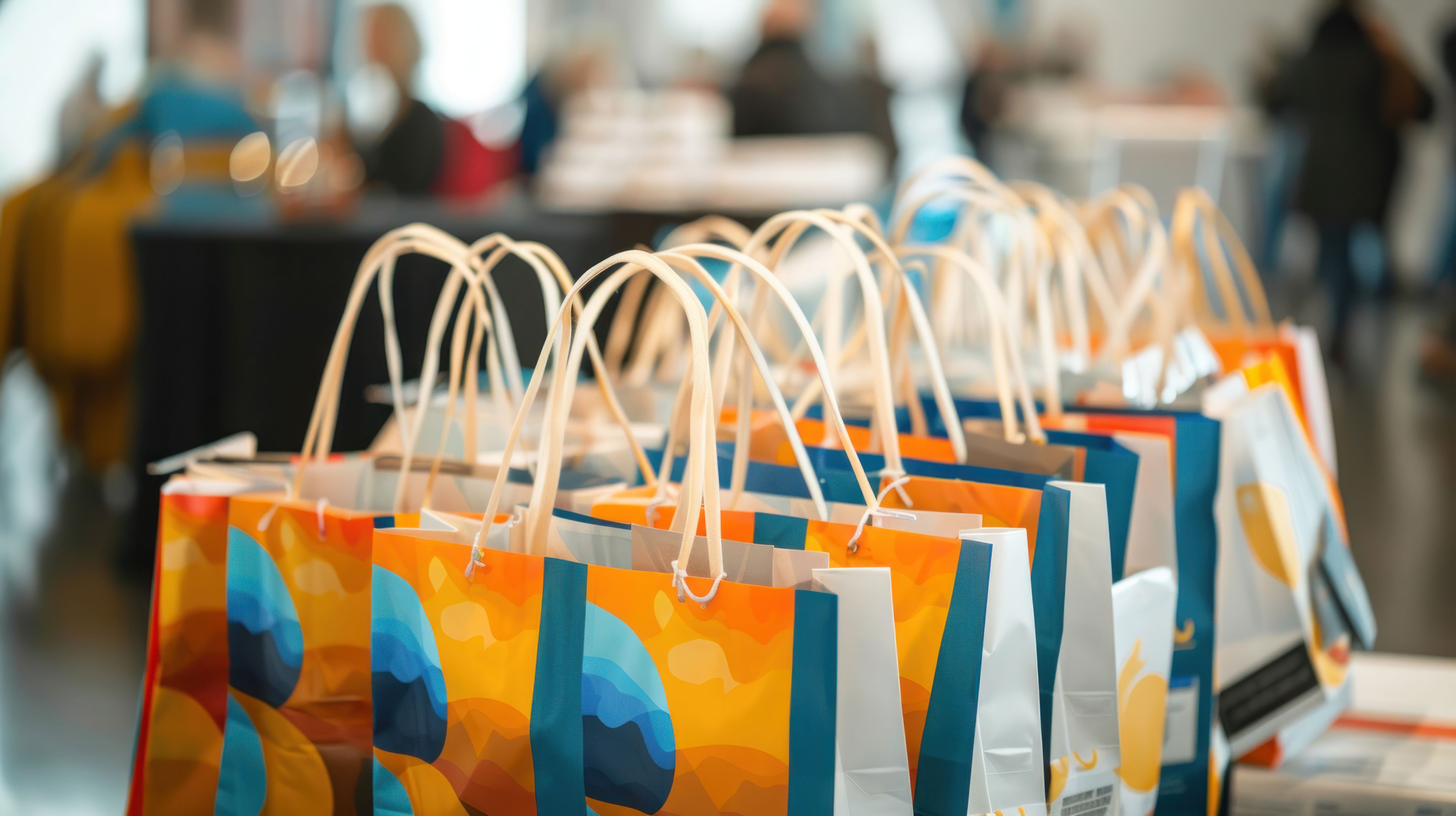
Got to give away? Try these suggestions from Event Cycle:
· Find something that they'll use in their everyday lives, like a biodegradable kitchen sponge
· Beeswax alternatives to clingfilm
· Food containers that really last!
· A book voucher - and recommend a local bookshop to spend it in
· Gift code to donate to a charity