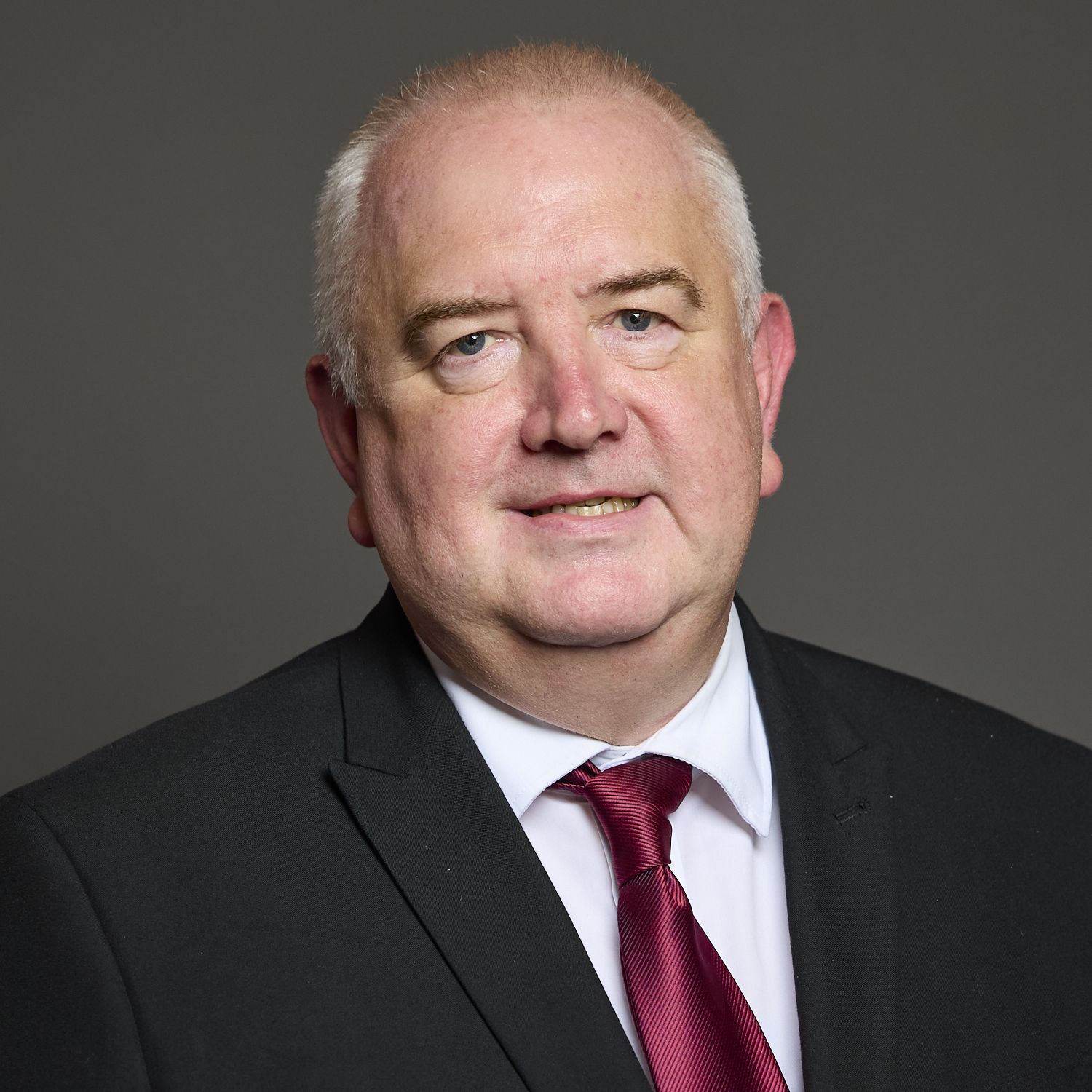
Can Martin Rhodes help events finally win Westminster’s attention?
The newly appointed chair of the All-Party Parliamentary Group for Events is taking aim at policy makers. Can he help shift the perception of events from a nice to have to a key driver of growth?


For years, the UK events industry has faced a familiar challenge in Westminster: being warmly acknowledged, but rarely prioritised.
Often framed as a “nice to have” - an add-on to tourism, hospitality or culture - the sector has struggled to secure consistent recognition as a serious economic driver. But according to Martin Rhodes MP, the newly appointed chair of the All-Party Parliamentary Group (APPG) for Events, that perception is beginning to shift.
“The key ambition for the group is to ensure that policy makers see events not as some sort of afterthought or added on extra that's quite nice to have - to actually see it as a key driver of trade, investment, growth,” he says.
That shift in perception sits at the heart of the APPG’s renewed focus - and could prove pivotal in determining how the sector is supported in the years ahead.

A growing voice
Rhodes, a 2024 intake MP and former Glasgow councillor, took over as chair late last year, and following the group's recent AGM he is clear that momentum must continue.
“The group is very much active - there are parliamentarians across Parliament who are interested in the issues surrounding events,” he says.
A key priority now is ensuring that interest translates into influence - particularly among ministers and senior policymakers.
“We want to continue the progress that’s been made with regard to engaging with ministers and to ensure that ministers are aware of the issues facing the events industry,” Rhodes explains. “All ministers have very busy inboxes. We need to make sure that we keep that profile up there, and keep pushing it further up the agenda.”
That effort, he acknowledges, requires persistence.
“There’s always an element of persistence and making sure that we persistently make the case around events.”
From local impact to national opportunity
Representing Glasgow North, Rhodes has seen first-hand the economic impact of events through venues such as the Scottish Events Campus and the city’s convention bureau activity.
However, he is aware that this impact is often misunderstood - particularly when it comes to business events.
“When you talk about Glasgow, people think of big music and concerts. But also there’s the huge economic benefit of business events that people don’t necessarily immediately are aware of - thousands and thousands of people coming into the city for those events.
“In terms of actual economic impact, it’s huge and therefore it needs to get attention, particularly from policy makers.”
That argument underpins a broader ambition: positioning events as a catalyst for growth not just in major cities, but across the UK.
“Events can be very much place-based growth in different parts of the UK and help ensure that we get economic growth that isn’t just concentrated in one area.”


"One of the challenges of being successful is that policymakers think, well actually, they don’t need as much attention"
A window of opportunity
There are signs that government is beginning to engage more seriously with the sector. Rhodes points to recent initiatives such as the Metro Mayor Summit, as well as a Culture, Media and Sport Select Committee inquiry into major events.
But expectations need to be realistic.
“What I would like to see is progress,” he says. “I wouldn’t be being honest if I thought we could make huge leaps forward, but I think we can make good steady progress in a whole range of areas.”
That realism reflects a challenging broader context - from geopolitical instability to competing domestic priorities - which inevitably shapes government focus.
It also highlights one of the industry’s less obvious challenges: it is not in crisis.
“One of the challenges of being successful is that policymakers think, well actually, they don’t need as much attention,” Rhodes says. “But actually, you’ve got something that’s successful here, get in and support it - there’s huge potential to take it further.”
The policy battlegrounds
While long-term recognition is the ultimate goal, there are several immediate areas where the APPG is pushing for progress.
Skills is a central concern, particularly around formal recognition within education and training frameworks.
“We will be pushing to ensure that the event sector is properly recognised in terms of apprenticeships, T level frameworks, and closing that gap that many people have identified,” Rhodes says.
Business rates are another priority, with the need for both systemic reform and short-term relief.
“There is a longer-term question about reform of business rates, but we should be looking at more targeted reliefs, particularly for mid-size, smaller, independent operators.”
International competitiveness also remains a key issue in a post-Brexit landscape.
“We still have issues in terms of how we promote the UK for events and trying to attract programmes and events to the UK,” he says. “Post Brexit, that’s more challenging, but we need to keep working on that.”
Alongside these structural concerns, the APPG is also focusing on accessibility - an area Rhodes believes still requires significant improvement.
“There are still too many barriers for people in terms of accessing events,” he notes, describing it as “a huge way in which we can push forward.”
Winning the argument
Despite growing engagement, Rhodes is clear that understanding of the sector remains inconsistent across Parliament.
“There are some people who do get it, however that may be patchy,” he admits.
Part of the APPG’s role, therefore, is educational, ensuring colleagues understand not just the existence of the events industry, but its economic significance.
“People are much more aware of those sort of consumer-facing events than they are of business-to-business events,” he says. “That B2B area needs to raise the profile amongst policy makers.”
Ultimately, the goal is a fundamental shift in perception.
“We shift people’s perspectives to actually seeing that events can be drivers for investment, trade, and economic growth.”
Backing a proven sector
If there is a single message Rhodes wants policymakers to take away, it is this: the events industry is already delivering - and could deliver more with the right support.
“When you’ve got a winner, make sure you back those winners so they can actually deliver more,” he says.
For an industry long used to making its case, that message may sound familiar. But with renewed political engagement, a more coordinated advocacy effort, and a growing body of evidence around economic impact, the conditions for change may finally be aligning.
The question now is whether Westminster is ready to fully recognise what the sector has been saying all along.