"We're feeling far more positive than we have for a long time"
One of the UK’s biggest agencies, BCD Meetings & Events is in the midst of its first three-year plan since 2019 as it gets back to longer-term strategy and planning post-pandemic. We caught up with UK managing director Helen McCabe to talk everything from procurement and client expectations to RFPs, AI, and mergers and acquisitions.


What’s the current focus at BCD Meetings & Events?
Helen McCabe: We saw in 2022 and 2023 two excessively good years following the pandemic. Last year we embarked on the three-year Thinking Forward strategy - year one is all about building our foundation. The new normal is clear, so let's start and think further ahead, rather than the place we were in during the pandemic. Because of the frenzied activity post pandemic, we felt as though we needed to regroup and realign in 2024 to make sure that the foundation was stable.
What does that mean for 2025?
HM: We’re going to really start to expand, embrace, excel, which is what our vision is for 2025. We set some pretty healthy growth targets for 2024, and we had an exceptional year. We're delighted. We've seen great results within The Collective, our creative events divisions, they are both really strong in the UK and the US with new clients and all also growth from existing customers.
We have a dual strategy within the business of expanding the services and products that we sell to existing customers, or we expand the solution. We're seeing a lot of success within that, but we're seeing a lot of new customers as well coming into The Collective.

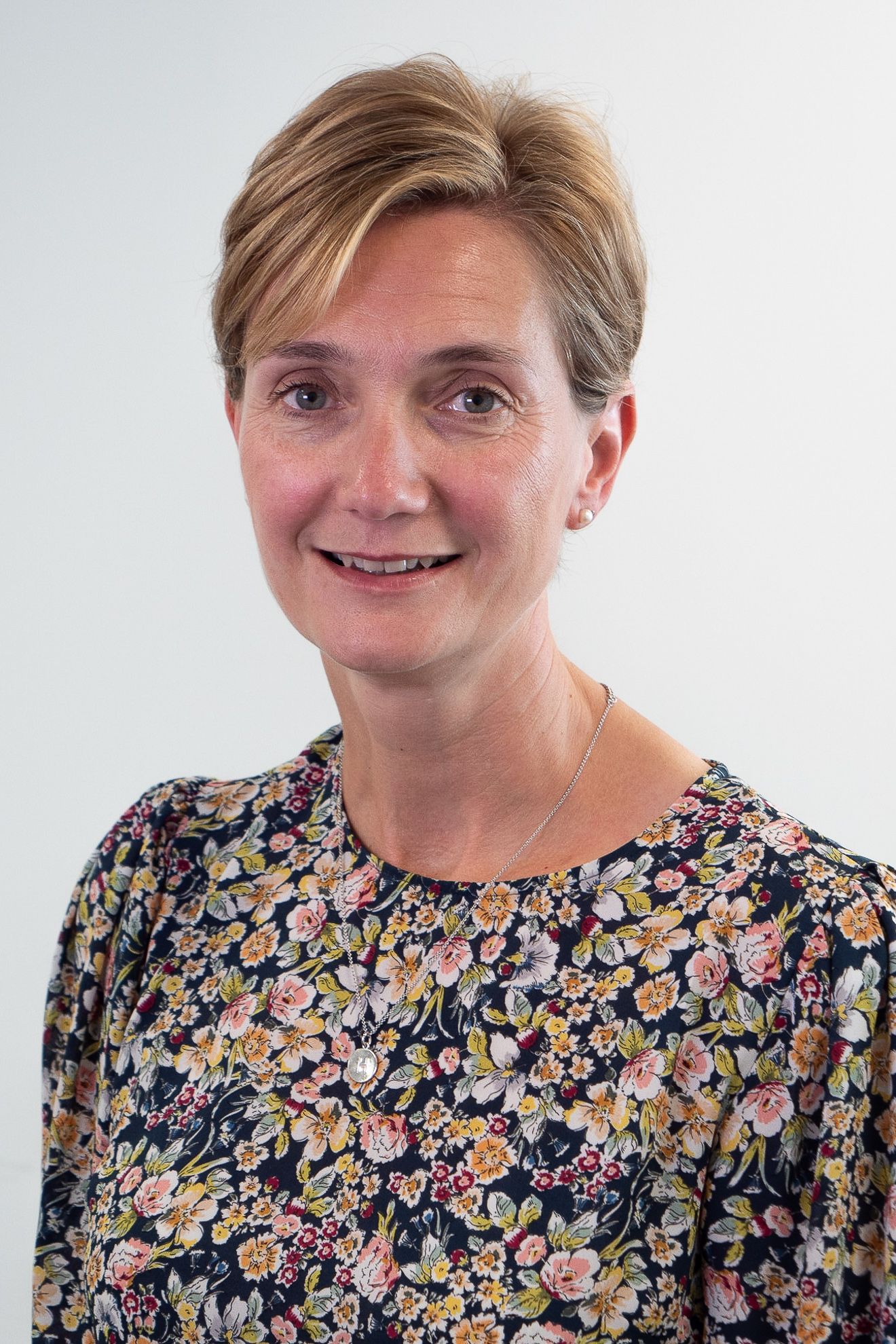
BCD Meetings & Events UK managing director Helen McCabe
BCD Meetings & Events UK managing director Helen McCabe






What other areas have you seen success in recently?
HM: We've also seen success within our congress practice area as well, within life sciences. So we're seeing a steady growth of customers, really building on top of the life sciences vertical that we have within the organisation.
Our APAC region is growing strongly, especially within the incentive market, while in LATAM, life sciences is super strong. We have pockets of growth and they're not all the same in all of our regions, but we're seeing steady growth, building and forging on the relationships that we've got with customers.
We’re a family-run organisation that has healthy values, healthy compliance protocols, financial robustness, and we're definitely seeing growth from net new customers as well as existing. It is super encouraging.
What do you see as the biggest challenges for 2025?
HM: It's no secret that customers want to continue to control their costs as they go into 2025 even more. There's a bit of nervousness about what's going to happen next year. Obviously, we've gone through the election in the UK and the US and everybody's been holding their breath to find out what is going to happen.
From a multi-regional perspective, whichever sector we're looking at, the visibility of data and what they’re spending and where is absolutely critical.
It’s critical that customers can see through the data, the value and the impact that we're making on their organisation within the meetings and events environment. You have various conversations with customers in various regions, but actually it all comes down to what am I spending where? And what value are you providing us with? What does that value look like to us?
In the recent BCD Meetings & Events What’s Trending report, you said procurement being involved in purchasing meetings and events is now the norm. How's that affecting things?
HM: Even when we're delivering very creatively driven events to our customers, procurement still has a seat at the table, even with the global head of events.
That is predominantly down to the agreements that we've put in place with those customers. It is coming at the forefront of a conversation more and more now. Procurement and the legal team having the conversation from the outset makes the whole experience and the solution a lot easier to work through for all parties.
Since the pandemic, the corporates’ requirements - MSAs, addendums - have really tightened up. Everybody's protecting themselves in the same robust nature now. Our time as an agency is really working on translating that corporate requirement to the hotel or the DMC or the supplier, to try to get a win-win scenario.
A lot more of our time is spent helping the customer translate their requirements into the supply chain for acceptance. Clients are becoming a lot more robust with this. In some circumstances customers are saying, ‘you either accept those terms or we go elsewhere’. There is definitely a lot more of the contractual conversation that happens up front now. Even when you're checking for space for a venue, you know, ‘will you accept these terms?’. Some customers will be even more forthright than that, saying ‘Agree to the MSA, otherwise we won't even give you a brief’.
It sounds like some of your team members are seeing changes to how they work. How are you dealing with that?
HM: The role of a venue search consultant has really changed. At one stage they were spending over 50 per cent of their time negotiating contractual terms with the venue. That's reduced a little bit now because we're working with customers to get more savvy on their agreement. But this whole compliance piece, adhering to policy is becoming an increasingly large part of our time.
We are really starting to look at how AI can help us with that, look at streamlining the contract checking process, how we can be more proactive with working with customers on different levels, depending on spend or requirements. But increasingly, in order to get that contract over the line, the amount of time that we spend on that is quite significant now.
We are seeing this as a new normal now going across the corporate environment.
What does this mean for RFPs?
HM: When you've got a multi regional, multi-million RFP, going through all of that complexity is quite a challenge. So the trend that we're seeing is the ratio of RFPs is reducing, especially in the MICE sector.
We used to see an organisation going out to RFP, and they'd come with this glossy document, the book of work, and that’s what they want you to price and respond to. They're still coming in. We're still seeing those. But what we're seeing an increasing amount of is customers who say, ‘OK, we're not going to RFP, we want you to come in and talk to us. These are our challenges. Can you come in and help us solution this?’
Rather than going out to an official RFP, we're being invited in to talk to some of these customers about how we solution because at the moment their spend is still so sporadic, they haven't got the visibility of spend.
I'm really not sure what the best way round is, it does feel less competitive, if I'm honest. We're being approached because they see us as a partner, that's quite nice. But it's still time-consuming and I'm not sure whether it's ultimately any easier for us.








You also mentioned skyrocketing expectations in the What's Trending report – what effect is that having?
HM: You've constantly got to re-engineer and evolve, you cannot stand still now. You've got to look at what's happening in different sectors and how that affect the meetings and events sector. In a couple of years what’s happening in the life sciences sector could come down the pipeline for the rest of the corporate environment.
The sustainability piece is really interesting because two years ago it was the top of everybody's priority list. Costs and value are definitely now top of the list again. But then you've got sustainability legislation, in Europe in particular, that we can't ignore.
So there's a huge amount of pressure for us guys in Europe to get things right and for it to be a priority for us.
I still think that the expectations of what value a customer needs is constantly building. The demand is for more of the same. So what good looked like in 2024 is going to be very different from what good looks like in 2025. The bar is constantly going up. It keeps us on our toes. We remain very close with a lot of clients and try to really get under the skin of what their objectives are, what their vision is and that you know, really driving to achieve those. You have to remain super close to your customers enable in order to do that.
Working with them on setting their vision and objectives has never been more important, so delivering great events and meetings and being in line with their long term vision and strategy is absolutely critical.
Where do you stand on AI? Are you looking at it?
HM: Everybody likes to talk about AI and machine-optimised learning and robotics.
It is being heavily tested and utilised at the right pace within our organisation.
I think there's a bit of nervousness around it. We have got a team of people looking at optimisation across the business and we are investing in that this year. We have had a number of projects where we have saved a significant amount of hours, mainly in the administration side of the business, in the back office. So that allows our team members to spend more time in front of customers.
We're also looking at how we can optimise processes. In 2025 we're really moving into the client facing side of things in particular and are talking to a number of customers about how we can work on some of their processes that would streamline, make more efficient, reduce risk, etc.




Mergers and acquisitions are everywhere in the sector at the moment. How does that change things for you?
HM: There's mergers, acquisitions and then there's partnerships as well. The partnership bit is sometimes even more interesting than the mergers and acquisitions.
The pandemic was difficult for our industry, a lot of individuals lost their businesses, which was soul destroying. Those that managed to work their way through it have now had a couple of decent years of trading and are now feeling that their P&Ls look strong enough and their business looks strong enough. But do they want to carry on? A lot of people are thinking, “OK, am I ready to sell?”
With the demands that the agency world has from large corporate organisations now, is this something that's sustainable for the smaller agency? That's my concern, especially with the National Insurance announcements that were made recently and the uncertainty around the cost control element as we go into 2025.
We're approached very regularly about opportunities. You should see some of the stuff we get. We’ve had one of them from a cycling tour company, one from a kitchen equipment company and they’re approaching an M&E company to see if we want to buy them. So I go back and say, can you do a bit more research about what we do? It’s sheer desperation.
How do you feel about the future of the events sector?
HM: When business was booming in 2022-2023, we had that massive, out of the blocks surge of energy and people were able to meet up with each other and do less via a screen, the challenge that we had was actually getting talent back into our industry and back into the hospitality industry. Although business was good and the numbers were looking great and people were meeting again, we were really struggling, especially after Brexit, to bring talent into the UK and to get people to feel excited about our industry again. They were going to work for Amazon or the NHS or whoever - they lost their love of our industry.
We'd got all this demand coming through, but we were struggling to meet that from a staff shortage and personnel perspective. And it wasn't just in the agency world, it was also when you got to hotels and restaurants, service was poor and they couldn't find the talent. Although it felt good, it was hard, hard work.
I think we've turned that corner now and we're back in a place where people are recognising and supporting each other.
Last night alone, we had 15 clients at a dinner just down the road. We're meeting with customers every single day face to face. We're hosting them at dinners and in new openings.
There's a lot of new openings in London, which is fabulous. Fam trips are back up again. People are travelling again, and people are seeing the industry as an exciting place. Costs have gone up, because we're having to pay everybody more to lure them back in. But all of a sudden it's being seen as exciting again and that is why we're feeling far more positive than we have done for a long time.
Yes, expectations from customers are high, but it helps us to reset our bar constantly and we feel re-energised. That's where we're at.
 Built with Shorthand