
How advocacy can unlock the global events economy
The IBTM World Forum for Advocacy promises to be a crucial moment for the industry, according to Martin Fullard, director, The Business of Events.


Martin Fullard, director, The Business of Events
Martin Fullard, director, The Business of Events




In an industry that contributes over US$1.6 trillion to the global economy, the true value of business events extends far beyond the staggering financial statistics.
The day before IBTM World is the Forum for Advocacy, taking place on Monday 18 November 2024, where key industry leaders will gather to amplify the importance of business events in driving innovation, knowledge exchange, and social impact on a global scale.
A preview of The Business of Events’ Global Destination Report 2024 will be presented, which will paint a picture of the where the global events sector finds itself now.
Last year, the Events Industry Council (EIC) and Oxford Economics published a landmark study evaluating the global business events sector. The research, which covered 50 countries, revealed that business events generate more annual sales than the air transport and telecommunication equipment sectors, with a combined output of US$2.8 trillion.
Moreover, if international business events were ranked as an economy, it would sit comfortably as the 13th largest globally, a figure that highlights the sheer scale of the sector’s financial contribution.



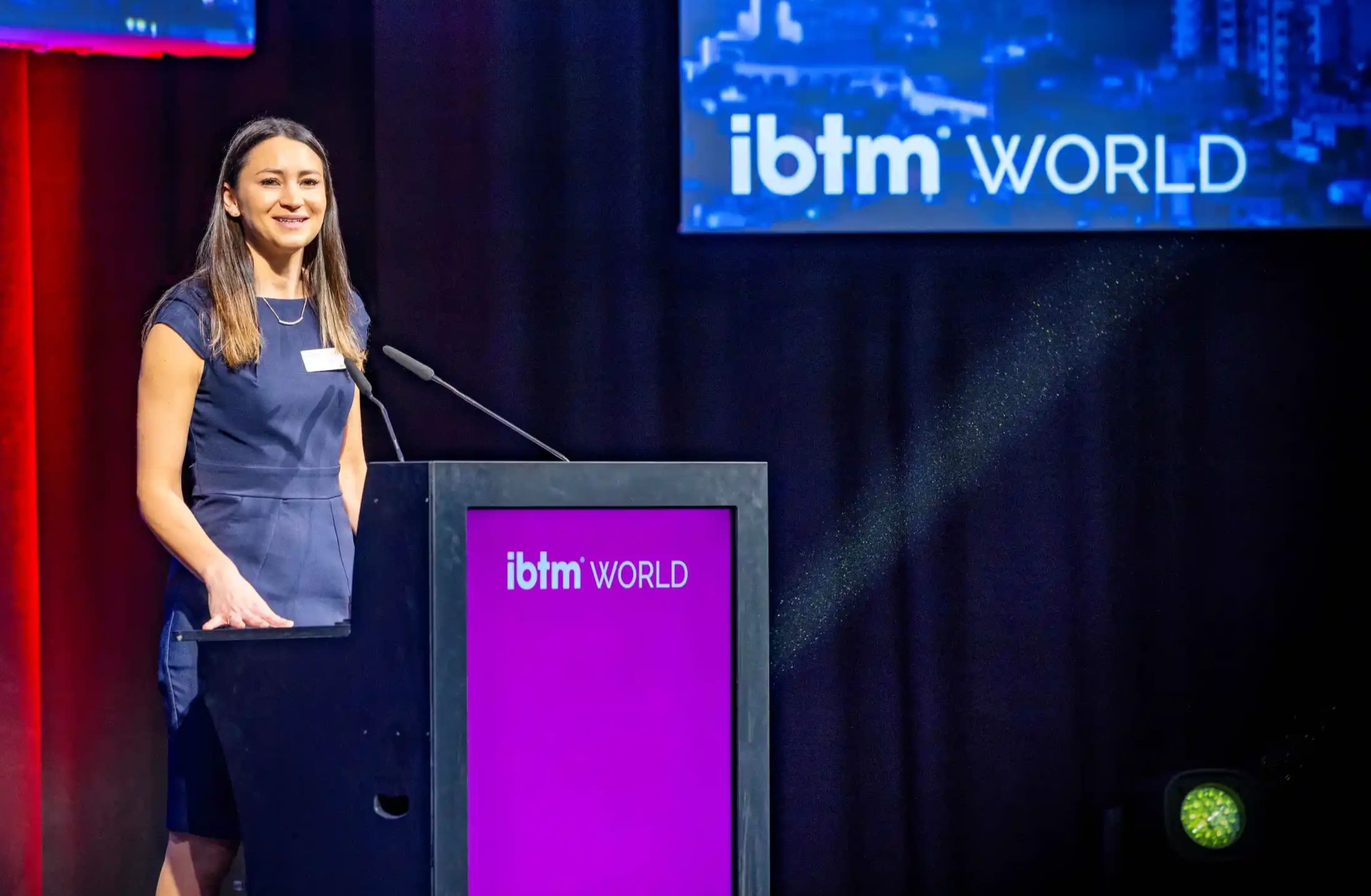
However, in a recent interview with The Business of Events, Sherrif Karamat, president and CEO of the Professional Convention Management Association (PCMA), said it’s not the headline numbers that tell the full story.
“The US$1.6 trillion figure represents our spending, but it doesn’t capture the real impact of business events,” he explained. “Other industries don’t define themselves by their GDP contribution alone; instead, they focus on the broader, catalytic effects they create. Business events do more than just generate money - they drive social change, foster innovation, and solve global challenges.”
It is this deeper impact - the 'catalytic' effects - that will be central to discussions at the Forum for Advocacy, hosted by IBTM World in partnership with The Business of Events.
Karamat’s insights reflect the evolving narrative of the business events industry, which must now highlight its role as a critical platform for addressing some of the world’s most pressing issues, from climate change to health crises.
The significance of advocacy
The invitation-only Forum for Advocacy will be held at the Torre Melina Gran Melia Hotel, and as a precursor to IBTM World, it aims to elevate the conversation around the true power of business events. This year’s forum will bring together an international group of policymakers, senior leaders, and influencers to discuss how the industry can better communicate its economic and social value to government officials and decision-makers.
Claudia Hall, IBTM World exhibition director, who will open the forum, spoke of the responsibility the business events sector has in championing its worth.
“Business events are too often seen as a subsidiary of tourism, but in reality, they are a powerful industry in their own right,” said Hall. “Our goal with this forum is to provide resources to help our community advocate for continued investment in business events and demonstrate their wide-reaching benefits.”
Attendees at the forum will include more than 60 delegates, including policymakers, headsof tourism boards, and representatives from countries such as Brazil, Iceland, South Africa, and the UK. Global organisations, including PCMA, the International Congress and Convention Association (ICCA), and the Joint Meetings Industry Council (JMIC), are also supporting the initiative, further underlining the growing importance of advocacy for the industry.






From numbers to social change
Karamat’s interview session will focus on the industry's role, position, and purpose. He will highlight the need for the sector to speak with a unified voice when addressing governments and policymakers. While the pandemic disrupted business events worldwide, it also catalysed progress in understanding the catalytic effects these events generate.
Knowledge transfers, research advancements, and serendipitous moments of innovation often occur when people come together at in-person events—outcomes that cannot be replicated in virtual settings.
“It’s those moments of serendipity, the different interpretations shared over a beer, and the prolonged discussions that lead to innovation and change,” Karamat pointed out. “You can’t replicate that over a 60-minute Zoom call.”
A 2023 report by the Events Industry Council further emphasised the sector’s progress in measuring these outcomes. Event technology has advanced rapidly, partly due to the pandemic, allowing for more detailed data collection on the impact and outcomes of business events. With tools like artificial intelligence (AI), the ability to measure the ripple effects of events will become even more sophisticated, Karamat believes.
However, he also acknowledges the need for a more standardised approach to benchmarking this impact across countries and regions.
Sustainability and overtourism
One of the critical issues to be discussed at the Forum for Advocacy is how business events can potentially balance the challenges of over-tourism and climate change.
Eloísa Urrutia, head of global sustainability meetings and events at American Express Global Business Travel, and Christoph Tessmar, director of the Barcelona Convention Bureau, will join a session exploring how events can positively impact local economies while remaining sustainable.
As the global tourism industry grapples with environmental concerns, Urrutia and Tessmar will argue that business events offer a solution to some of these issues. Events bring in highspending delegates who contribute to local economies but also leave a positive legacy through knowledge exchange, innovation, and investment in the host destinations.
A unified agenda for action
The Forum for Advocacy will close with a policy agenda discussion, outlining what the business events industry should be advocating for moving forward.
As Hall noted, the aim is not just to talk about advocacy but to leave the forum with actionable objectives. These key takeaways will be shared during the first afternoon of IBTM World on the Impact Stage, ensuring that the message reaches a broader audience.
“We want to support the long-term growth of the business events sector and ensure it continues to contribute positively to global communities,” Hall concluded. “It’s vital that we keep pushing for a sustainable, diverse, and inclusive future for business events, one that recognises their power to drive change and create lasting legacies.”
The IBTM World Forum for Advocacy promises to be a crucial moment for the industry, highlighting the importance of speaking with one voice to unlock the full potential of business events. By doing so, it will pave the way for greater investment, recognition, and, ultimately, a more significant impact on the world.
The Forum, which is run by The Business of Events and IBTM World, is being supported by PCMA, ICCA, the Events Industry Council, The Strategic Alliance of The National Convention Bureaux of Europe, the Joint Meetings Industry Council (JMIC), City Destinations Alliance, and The Iceberg.
 Built with Shorthand