Why AI can’t compete when it comes to relationship building
Don't underestimate the importance of people power, says Marina Papadopoulou, head of business development at Church House Westminster

AI can feel like it’s everywhere…from social media to work to online shopping. Even when it’s not there you’re talking about it, so in many ways, it’s still there.
According to the European Parliament, AI, or artificial intelligence, is, “the ability of a machine to display human-like capabilities such as reasoning, learning, planning and creativity.” With 40 per cent of businesses likely to increase their investment in this fast-evolving technology, there is no doubt it will have a profound impact on the events industry.
From supporting learning and inspiring creativity to sharing information and increasing accessibility to reach people on a wider scale. It will be revolutionary, and we are wholeheartedly along for the ride. But, of course, AI can’t do everything, and neither would we want it to – we are an industry centred around people, after all.
So, in this complementary partnership between humans and AI, let us explain why people power is still fundamental to perhaps the most crucial element of events - building relationships.
Crafting connection
As with so many of our relationships in life, it all comes down to trust. Studies suggest trust can be built faster and more successfully when centred around in-person communication. After all, when planning an event, there’s nothing quite like the reassurance of a strong team around you, from the event coordinator to catering to AV and everything in between.
In fact, we often find that clients ask for the same event coordinator as their previous events because of the understanding, rapport and connection they’ve built with them. Given it’s also people who are on hand to solve any last-minute challenges, this connection is powerful and shouldn’t be underestimated.
Sometimes you just need to know, 'it isn’t only me'. There’s a comfort that comes from the empathy we humans can provide – a feeling of being understood and related to, perhaps sharing a laugh about something, or having a fear assuaged about a different element of an event. As is so often the case, things aren’t always black and white, and people have an affinity for nuance that enables them to pick up on this.
For example, knowing when an affirmative response may be a hesitant one, something which can then be explored with the client in more depth. Indeed, the more comfortable a client feels, the more confident they’ll be in voicing their opinion and, the more open and honest their brief is, the more successful their event will be as a true reflection of themselves.





Harnessing emotion
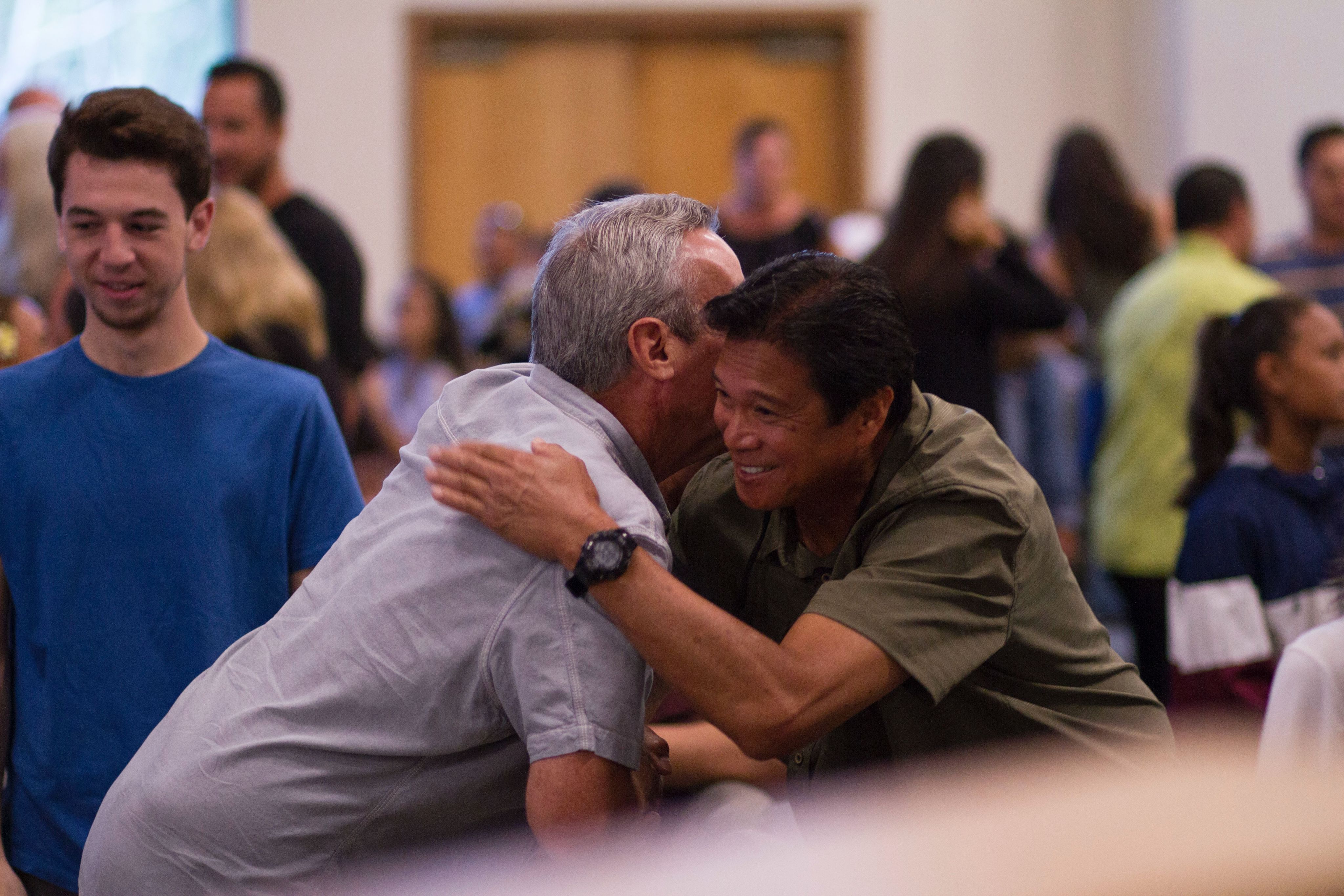
When it comes to communication, the most powerful form can often be the words that aren’t said. Whether it’s a reassuring squeeze on the shoulder before guests begin to arrive, a hug of congratulations when the event goes well, or an encouraging smile before a speech, for example, human touch has an unparalleled ability to instil confidence and comfort which words alone cannot achieve.
As event professionals, our talent at discerning this often comes from the sixth sense we have honed over years of experience – gut instinct. For example, we can sense when we’ve got it almost right, but our client just needs that little bit extra. We can sense when a client needs our advice or, just as importantly, needs us to step back so they can process. Our instincts are an invaluable tool, and they’re not something money can buy.
As humans, we are naturally social beings, and you don’t need me to tell you how much the last few years have emphasised our need for connection. It is these moments of shared experience that build our bonds with fellow human beings. In fact, feeling connected has a significant impact on our motivation at work and, as we know, event planning is a two-way street. Building a rapport with clients shows them that they are more than just a business transaction to you - you see them as a person. Not to mention the fact this personal connection will encourage loyalty.
Shared experience also allows you to utilise your history with the client to employ those special touches which make all the difference when building relationships. For example, you know the client prefers decaf coffee to regular so make sure that’s available, or you know the client works best when they receive information in short, manageable chunks, so you adapt your approach accordingly.
There’s undoubtedly an important and beneficial role for AI in events, and we embrace this excitedly. Its partnership with humans will only make the industry stronger as the individual strengths of both are used.
When it comes to building relationships, for the best results, people power should still take the lead. AI can most definitely enhance and support but, for the time being, it can’t replace the fundamental groundwork put in by people. What we’re saying is, essentially, AI can do the head, but it can’t quite do the heart yet.


Photo by Sable Flow on Unsplash
Photo by Sable Flow on Unsplash
 Built with Shorthand