Gen Z isn’t changing the rules - the rules are already broken
Gen Z isn’t trying to disrupt the workplace - it’s responding to a world that’s already changed. Freya Foster, senior project executive at Principal Global Events and a member of Fast Forward 15’s 2025 cohort, shares a Gen Z perspective on work, communication and what the events industry needs to understand now.


Recently, I sat on stage at Cvent Connect for a panel discussion on Gen Z behaviour in the workplace. In the lead-up, I shared my thoughts with friends and colleagues, both Gen Z and non-Gen Z. Comparing the experiences that shape how we behave, communicate and navigate today’s multigenerational industry.
The more I listened, the clearer it became: Gen Z isn’t trying to rewrite the rules… the rules simply no longer fit the world we’ve inherited. Our conversations kept circling back to the same truths. That transparency matters, timelines have shifted and inclusivity is non-negotiable for Gen Z.

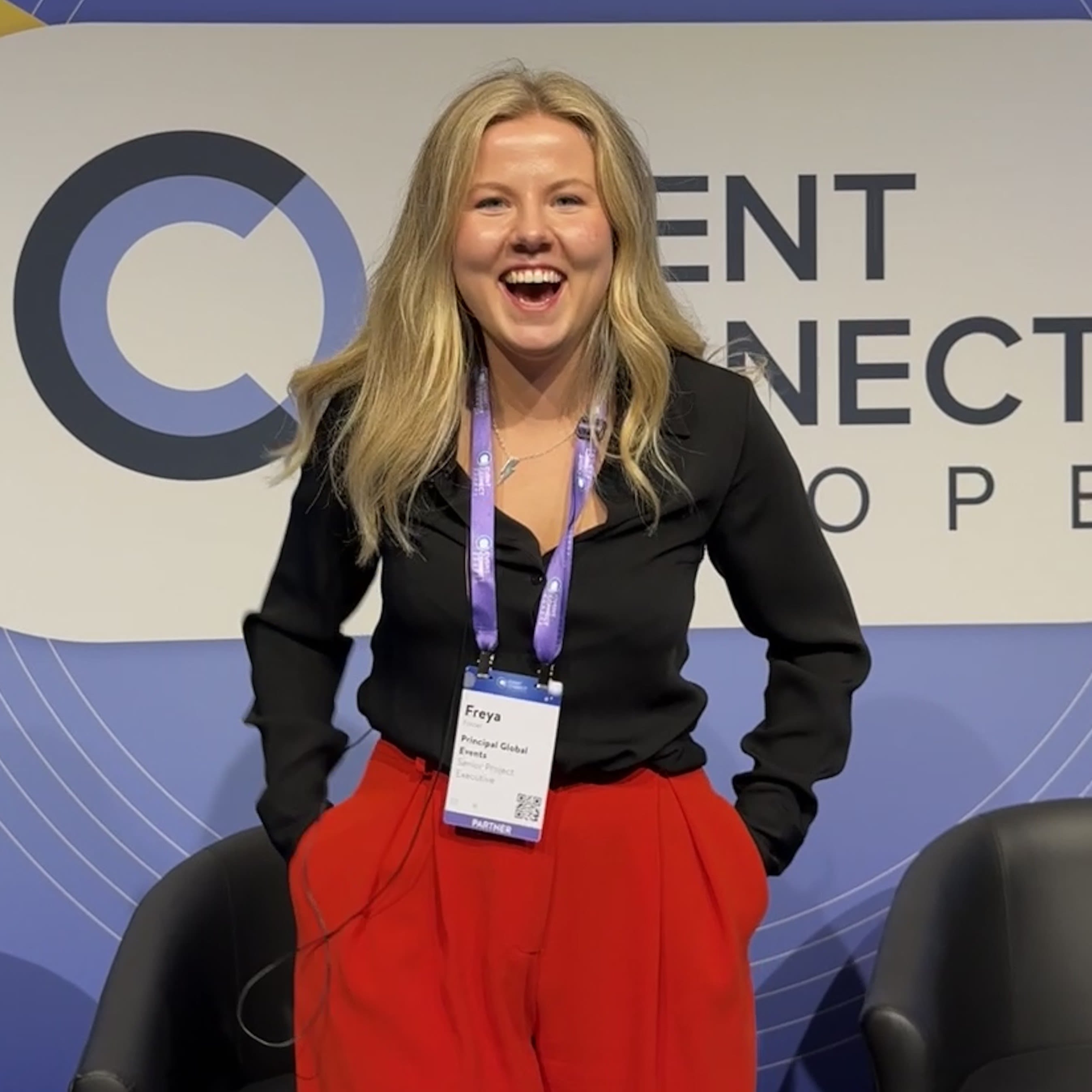
Freya Foster, senior project executive at Principal Global Events and a member of Fast Forward 15’s 2025 cohort
Freya Foster, senior project executive at Principal Global Events and a member of Fast Forward 15’s 2025 cohort
As a Gen Z event professional, I’m keen to spark conversation and further engagement within the industry to help create a positive working environment for all generations.
So here goes… a look at Gen Z behaviour, the timelines we’re navigating, how we communicate, what matters to us and what we’re championing.
Gen Z isn’t trying to rewrite the rules… the rules simply no longer fit the world we’ve inherited
A different timeline
Gen Z is often labelled as uncommitted or quick to move on. But our mobility isn’t usually impatience, it’s practicality.
We’re not on the same timeline our parents were. The idea that hard work in your twenties could lead to home ownership in your thirties is, for most Gen Zs, completely unrealistic. This level of security feels further out of reach than ever. Many of us continue living in house shares, rely on renting well into adulthood and experience higher levels of anxiety linked to ongoing financial instability.
This environment naturally shapes our behaviour. Job moves often become a route to survival rather than a sign of disloyalty.


Honesty over hierarchy
This uncertainty also affects how we connect with others. We often feel most comfortable and most understood, when we can have open, relatable conversations. In a people-centred industry like events, communication is everything, and Gen Z simply communicates differently.
We tend to be emotionally open. When asked how we are, we answer honestly rather than defaulting to “I’m fine, thanks.” For some older colleagues, this can feel unusual or even like oversharing, but for us it’s a sign of trust and part of how we form meaningful connection.
In communication, Gen Z values context, relatability, and transparency. We respond best in cultures that mirror these behaviours, where colleagues make time to understand one another, and honesty is treated as a strength rather than a breach of formality.


Clear pathways and predictability
This appetite for transparency naturally extends into how we view our careers. As a generation, we value clarity and structure. Data shows we avoid large financial risks but readily commit to small, predictable ones. This is reflected in our lower credit card usage but higher subscription habits.
This translates directly into the workplace.
We want to understand our path: how we can grow, what progression looks like and what the next step realistically is. When leaders say, “Gen Z all want to be CEO,” what I hear isn’t entitlement but ambition and a desire to understand the route ahead.
Frustration arises when pathways are vague or when goalposts move without explanation. Transparency builds trust; silence breaks it. If circumstances change, offering context matters. This simple openness is often what retains Gen Z loyalty.


Professionalism after Covid: a redefined standard
Covid gave us an unprecedented glimpse into people’s lives with pets, children, cluttered kitchens and hoodies in place of suits. That barrier never truly returned, and many of us believe it shouldn’t.
Gen Z has grown up with this shift and is helping reshape what professionalism means today.
The old version of professionalism… (or so I’ve been told):
- Showing face and staying latest equalled working hardest
- Smart shoes and stiff suits (usually uncomfortable)
- Respect equated to silence, a very hierarchical culture
- Burnout quietly normalised
- Personal life kept firmly separate
- Seniority tied directly to age
The new professionalism:
- With WFH and flexible working, “being the last one in the office” no longer signals commitment. Professionalism is now about getting the work done, not the hours you’re visibly at your desk
- Business casual has taken over, comfortable trainers and elastic-waist trousers are absolutely part of the modern work wardrobe
- The hierarchy is flattening. A culture where colleagues are respected across the structure, not just upwards. Junior and senior team members alike have space to speak and contribute
- Work and life balance is seen as essential, not indulgent
- Flexible working has blurred the old separation, you can put a dark wash on and still make meeting number three of the day
- Career stage is no longer tied to age. Career changes are now common and expected. As generational historian Dr Eliza Filby highlights, “age does not equal stage” and this perspective should be reshaping how organisations view talent and progression
We are not challenging authority for the sake of it. We’re engaging. We’re asking questions. We want workplaces where honesty is normal and where people feel safe sharing what they need to perform at their best.
"We want workplaces where honesty is normal and where people feel safe sharing what they need to perform at their best"
Leading on inclusivity
Once the traditional barriers of professionalism came down, what sat underneath was people… real lives, real needs and real differences. Gen Z has grown up in this post-Covid reality, and it has shaped our instinct to champion inclusivity and individuality in the workplace.
This also means challenging the stigma that still lingers among older generations around topics like neurodiversity, mental wellbeing and workplace adjustments. We want environments where people can openly share the support they require, without fear of judgement or of “getting it wrong”.
To achieve that, conversations about accessibility need to be normalised. Employees should feel comfortable discussing what they need to do their job well. Employers should talk about accessibility themselves, even if they’re still learning the language
Learn from Gen Z’s openness. Let our unapologetic approach to inclusivity encourage you to champion your own needs too, including those you may have been hesitant to voice. By breaking stigma together and recognising the value in individuality, we strengthen our teams, our workplaces and, ultimately, our industry.


Gen Z isn’t asking for special treatment. We’re asking for a workplace that reflects the world we live in. These aren’t radical ideas and they shouldn’t still be up for debate. They’re simply the next natural step in how we work. Listen to Gen Z and what we are telling you about how the workplace is evolving.
As people people (events people), let’s evolve together. Let’s create workplaces that are open, human and shaped by all of us… not just the loudest or the longest-serving.
If you want a Gen Z perspective on something you’re navigating, ask us. I’d love to hear from you. Consider this your invitation to “Ask a Gen Z”, send your questions, scenarios or assumptions my way, and let’s keep the conversation going.