
Turbulent times: how eventprofs can get ahead of the weather
Unexpected transportation issues can throw a spanner into meeting plans, and travel turbulence - actual and metaphorical - is only expected to get worse as climate changes.


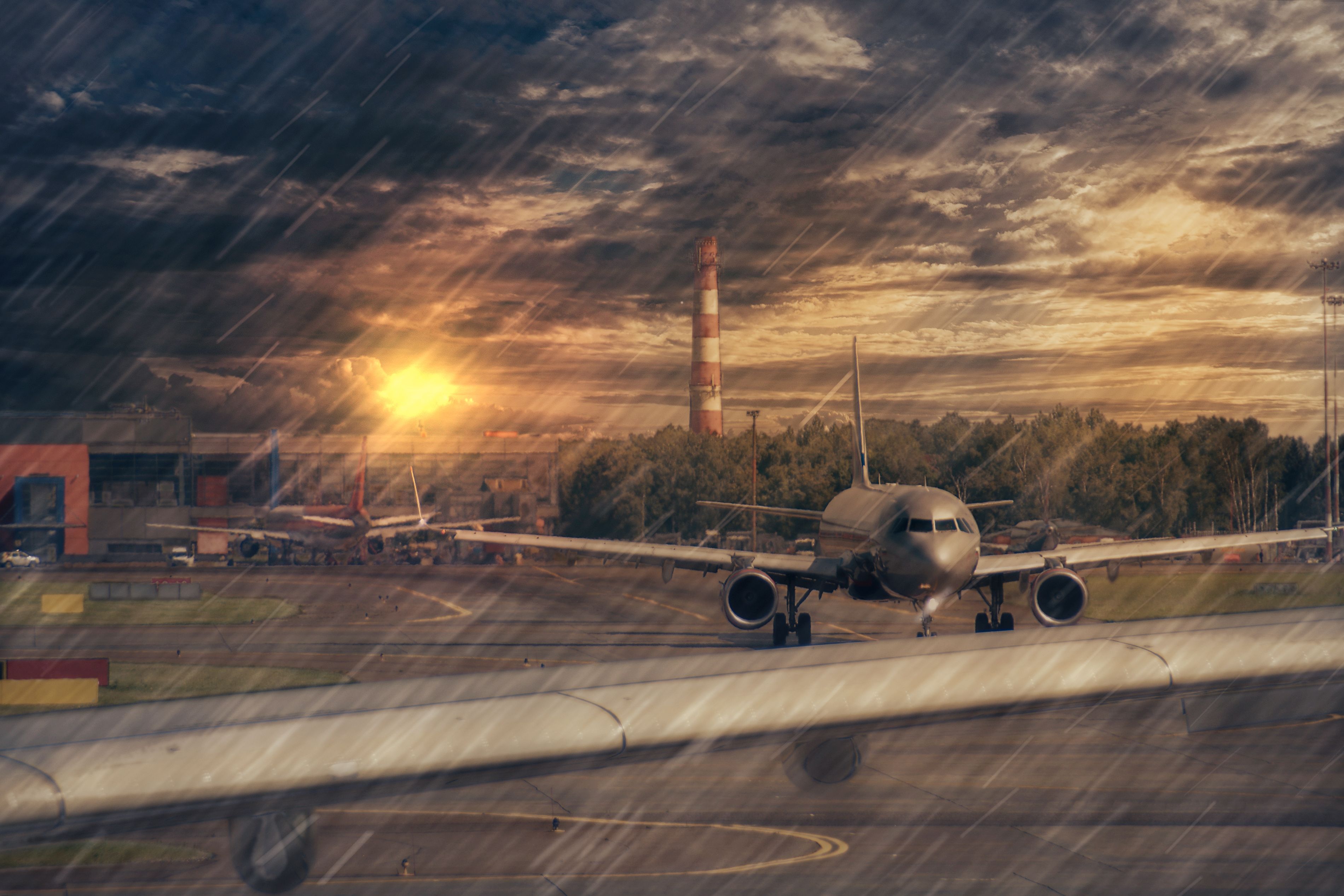
International travellers have come to expect disruptions during peak storm seasons. When Typhoon Shanshan made landfall in Japan in late August, more than 2,000 flights at Japan’s 10 busiest airports were grounded.
A rapid assessment by Imperial College London indicates that typhoons like Shanshan have become 7.5 per cent more intense and 26 per cent more likely due to climate change. Similar patterns of increasing severity have been observed in the Atlantic region. And it’s not just typhoons or hurricanes to think about.
Also in August, golf ball-sized hail punctured the roof of Calgary airport, causing flooding to part of the building and the cancellation of 103 flights. Rebooking was delayed as planes needed to be inspected for damage. One concourse of the airport is expected to be closed for repairs for at least 18 months.
Hail is common in Alberta, and has become more frequent over the last 50 years. Calgary advises residents to prepare for larger hailstones and storms throughout more of the year as climate changes.


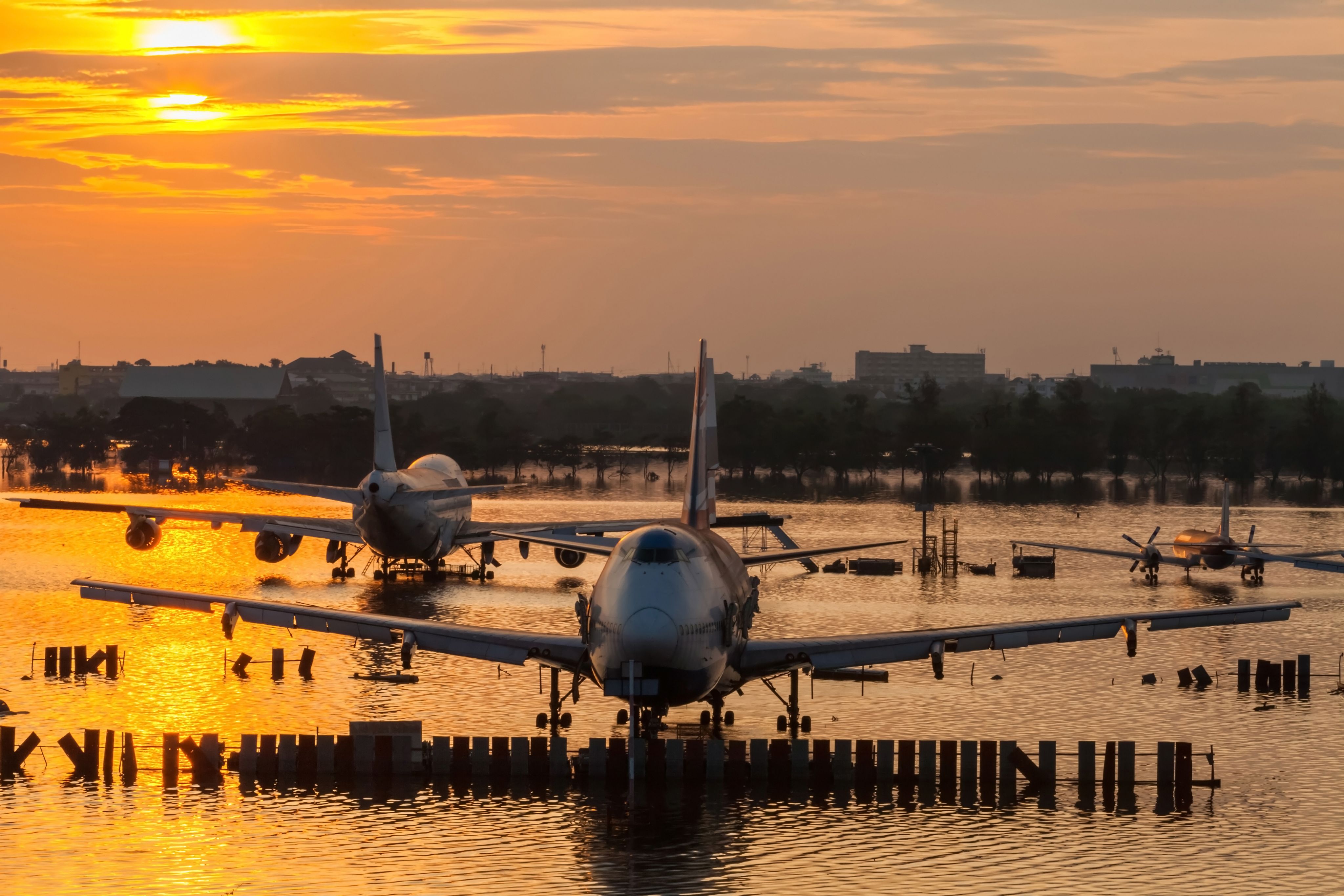

Four months prior and half a world away, the tarmac at Dubai International Airport was submerged following the heaviest rainfall in the region in 75 years. Approximately 1,200 flights were impacted, roads were impassable, hotels and venues were flooded and at least three major business events were cancelled, including Middle East Energy, featuring more than 1,500 exhibitors and participants from over 90 countries.
An assessment report by researchers from nine countries determined the rainfall event was 10-40 per cent more intense than it would have been had it occurred in an El Nino year, in a 1.2°C cooler climate. Their report provides regional evidence of a global trend scientists have observed: that extreme rainfall events are becoming more likely and severe due to human-caused climate change.
Research suggests a global mean temperature rise of 2°C would place 100 airports below mean sea level. Among those most at risk include Bangkok’s Suvarnabhumi Airport, Shanghai’s Hongqiao and Pudong International airports, Louis Armstrong New Orleans International, Amsterdam Schiphol, Newark Liberty International, and London City.
The vulnerability of low-lying airports has hit home before. In 2012 storm surge from Hurricane Sandy closed LaGuardia airport for three days, affecting approximately 1,200 flights. Coastal flooding also cancelled the New Jersey Education Association and New Jersey State League of Municipalities conferences in Atlantic City. At least 98 events were reported as disrupted by the storm, not including 2,300 weddings that were put on hold and widespread closures on Broadway, causing $8.5 million in losses. Research shows that climate change caused approximately 10cm of coastal sea level rise in the 100 years prior to Sandy. This caused 71,000 more people to be affected by the storm, adding $8 billion in damages.
From runway damage in London to cancelled flights in Phoenix, and adjusted takeoff trajectories in Las Vegas that may cause delays, extreme heat also affects airport operations in multiple ways. This is particularly concerning given July 2024 saw the highest global surface temperature since records began in 1850, making it the 14th consecutive record-warm month.
Concern about climate change is also fuelling protests - and airports have become targets. In July activists mobilised to disrupt flights across Europe, demanding stronger action to curb emissions.
And if that were not enough, there are also signs that severe-or-greater clear air turbulence has increased by 55 per cent between 1979–2020, particularly over the North Atlantic and continental USA. This has led researchers to suspect climate change may be a contributing factor.
While accidents due to severe turbulence are rare, incidents such as occurred on Singapore Airlines flight 321 in May, where one man died and more than 100 people required medical care, are enough to keep the fearful off a plane altogether.
What can you do?
Assessing climate risk exposure is a step all planners can take to reduce the probability and severity of a travel disruption. This involves asking: how reliant is the event on a dependable, affordable transportation system that could be disrupted by climate change?
Answering this question can clarify what’s at stake and provides a starting point to assess the cost-benefit of action. This can help eventprofs plan to make events more climate resilient while a runway still exists to do so.
And while it’s easy to imagine how a sudden halt in travel could impact event operations given the Covid-19 pandemic, “micro-turbulence” in travel in more persistent and escalating ways due to climate change may be a blind spot.
Policies and procedures for imminent events are a starting point for action, and may need to be updated in a variety of ways. Staff and contractors can be directed to book refundable fares and cancellation insurance so costs are recoverable if travel can’t proceed. Participants can also be encouraged to do the same.
Venues can be requested to provide information about how they manage severe weather. Emergency plans can be adapted to include local alert and response systems.
Event cancellation policies and communication channels can clarify decision-making protocols in the event of a weather issue.



Longer-term preparations might include:

Photo by Teemu Paananen on Unsplash
Photo by Teemu Paananen on Unsplash
Planning for engagement models that provide new revenue streams that are less reliant on travel networks that may be disrupted. This might include new online event products and permanent hybrid formats for live events.
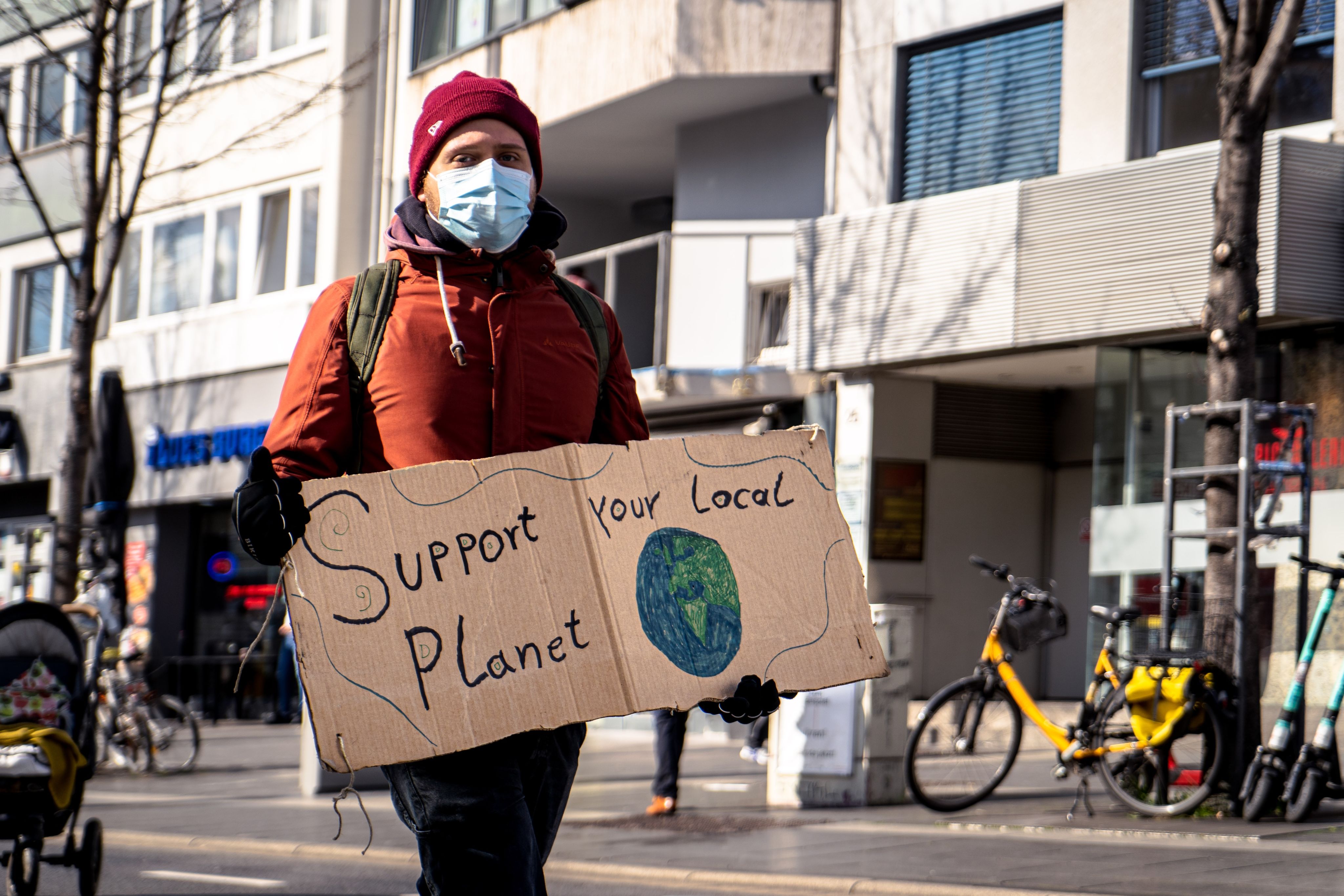
Photo by Mika Baumeister on Unsplash
Photo by Mika Baumeister on Unsplash
Adjusting event contracts and insurance to include provisions for climate-related disruption.

Photo by Fahim Muntashir on Unsplash
Photo by Fahim Muntashir on Unsplash
Exploring weather monitoring technology and equipment for in-person events, if necessary.

Photo by Scott Goodwill on Unsplash
Photo by Scott Goodwill on Unsplash
Expanding emergency plans and staff training to consider a greater diversity of climate risks related to travel, particularly heat.
Destination selection processes for in-person events can also be adapted to consider climate risks:


Photo by Tony Stoddard on Unsplash
Photo by Tony Stoddard on Unsplash
Are local monitoring and alert systems in place to ease communication with attendees should something happen?
It’s important to state that in addition to being a victim of weather-related travel disruption, events also contribute to emissions that cause climate change. So in addition to pursuing measures that accept and prepare for climate risk, eventprofs also have a responsibility and opportunity to address how they contribute to action on climate change more broadly.
This can include a two-flank strategy to measure and reduce emissions from event logistics while also stepping up efforts to discuss solutions.
This article is taken from the Autumn/Winter 2024 issue of M&IT - to read the full magazine online, click here
 Built with Shorthand