
'I earned 27 times more as an owner than in a salaried events job'
John Fisher has spent more than 40 years founding, buying and selling small businesses in the events sector. Now he's written a book about his experiences. Paul Harvey reports.


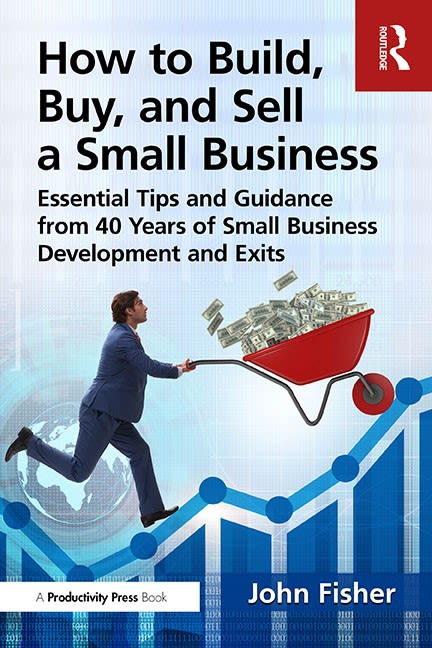
"It is only now, looking back, that I recognise I really was an entrepreneur", says John Fisher, events industry veteran and author of new book How to Build, Buy, and Sell a Small Business.
This may seem strange coming from someone who has, as an owner, managed an incentive travel business, a motivation agency, an employee engagement consultancy, an app development boutique and an event software supplier during a 40-year events career. "I never identified with the phrase 'small business owner'", he adds. "I was just doing my job."
Now Fisher has taken all the practical, experienced advice gleaned from more than four decades of just doing his job, and poured it into his new book. Published by Routledge, it covers non-technical issues such as 'Am I really suited to be an entrepreneur?', managing salespeople, dealing with potential fraud and much more, including selling your business when the time is right.
It's a hugely engaging book, full of hard-won advice vividly related. Fisher's to-the-point style makes it perfect for dipping into - every page teems with useful nuggets and anecdotes. To find out more about why he wrote the book, and what he's learned from 40 years of small business development and exits, I caught up with him for a chat...
Why did you write the book?
John Fisher: Over my 40 years or so in business I have always tried to ‘make sense’ of things which were not widely recorded anywhere. I found myself writing things down simply to understand them. So, during my incentives/events career I wrote 10 ‘how-to’ books that just explained what I found to be the best way to do things. The topics ranged from conferences and incentives to benchmarking and branding, ending up with the importance of engagement.
Stuff which was worth a mention, but not as a book, found their way into magazine articles or small seminars such as the Bribery Act and Corporate Manslaughter because the law was changing at the time I wrote them. Event organisers could suddenly find themselves open to prosecution if they did not follow certain operational guidelines - previously only ‘companies’ could be sued or taken to trial in the UK.
When I sold off the last of my five companies - making myself redundant in my early 60s! - I then worked with an old corporate adviser at KLP who specialised in building up small businesses for sale and finding someone to buy them. I was a client, then a consultant for them.
After doing that for three or four years I realised here was another area which was well covered by technical experts (legal/finance) but almost nothing was published from the point of view of the small business owner with no technical training.
So, I decided to distil the essence of things I thought had gone well over the years and things which I could have done better in this book when it came to business issues. I didn’t always follow my own rules - no-one is perfect.

"Anyone can create more volume; what’s hard is producing more volume at a profit"
John Fisher


Who is the book for?
JF: It is aimed at any small business owner and makes the distinction that to qualify as an SME in my mind you had to have employees and premises -otherwise you are just a sole trader or consultant. It’s for owners who want to build value and sell on their business for a profit, not simply to keep busy during their career and earn a modest income.
The style is deliberately short, sharp paragraphs with no footnotes or references to look up as I don’t think my typical audience are big readers of jargon-filled business books.
Is being good at an ops job the same as being good at business?
JF: Almost everyone who owns a small business starts off being a skilful operator who then needs more and more employees to help with the volume of work. Over time the ‘boss’ distances themself from individual clients and spends most of their day doing business planning and admin. But it’s only when you start doing the back-office stuff that you really understand how your business works and how profits are really generated. The more jobs you do the more patterns you see as to how to improve things. Anyone can create more volume; what’s hard is producing more volume at a profit!


How much of a learning curve is selling a business?
JF: It's huge. Most owners do not regularly record their progress through management accounts; they tend to count cash as ‘success’ and only look at their efficiency well after the financial year has ended - by which time it is too late to change things for last year. They often don’t include their own remuneration in the numbers and so for years they work under false pretences, thinking they are making a profit when they are not.
What also happens is that retirement or deciding to sell the business for some other reason creeps up on the owner and they find they have a poor ’product’ to put in the market once the buyer’s accountants and lawyers get hold of the detail. It’s often too late to change things by then and the business either collapses without you or goes for a song, even after 20-30 years of trading.
The key number is average pre-tax profit in the three years before you sell. Most buyers will offer a multiple of five to 10 times that number, depending on how confident they are that your business can continue at the same rate without your input. After all, you will be off and they can no longer rely on your guiding hand - so it’s important therefore to have a great team running things rather than you taking credit for everything that goes well.
You need to be able to tell a buyer that you are ‘just a figurehead’ and that the business runs itself with your great team. Hard to tell a buyer that you do nothing and that other people do all the key work, but that is how you sell a business on. You have to convince the buyer that your absence will make no difference or even improve profits because your costs will disappear.








What’s your advice for SME owners?
In the book I’ve picked out a small number of key issues which an SME owner should look at to improve the chances of a reasonably successful career as an owner and eventual seller of a business or businesses.
They are:
- check you are psychologically happy to be in the risk business
- do you get on with people?
- can you or someone you know sell stuff?
- are you good with money and numbers?
- be a natural list-maker/planner
- be happy to grow sales rather than simply stay still
- deal with moral issues such as bribery, fraud and corruption
- focus on the exit, not just doing more sales each year
Why bother buying and selling businesses? What makes it worth the hassle?
In my summary chapter I calculate how much extra I earned as a business owner compared with doing a salaried job over 40 years. The result is I earned 27 times more spare cash as an owner than being an ‘executive’, or whatever, as an employed person in the events industry.
The money is not, of course, the only reason you would want to own a business - but it helps when you are no longer employed.
How to Build, Buy, and Sell a Small Business by John G Fisher is published by Routledge, a Productivity Press Book, 2025
Career timeline
1974-78 French/ German at Oxford University
1978-80 Account handler at Brann, a direct marketing agency
1980-84 Marketing executive at Lincoln Life, handling sales incentives and events
1984 Joined Page & Moy Travel in Leicester to set up Page & Moy Incentives as a groups incentive travel agency
1989 Split off from Page & Moy Leicester following purchase of group by Barclaycard, formed Page & Moy Marketing with Tony Moy, based initially in Brocket Hall but then relocated to new premises in Milton Keynes
* Bought Brevis Travel, Watford to expand travel clients
* Bought Fly for Lunch, to handle small VIP groups
1998 Sold Page & Moy Marketing to management team, Tony Moy retired.
2001 Bought 50 per cent stake in Oxford International, pharmacy events agency, formed Oxford Motivation as an incentive comms agency.
2005 Sold Oxford Motivation to Indeprod, a production agency near Thame.
2007 Indeprod went bust, bought Oxford Motivation back from receivers and formed Fisher Moy International (FMI).
2007-2019 FMI trades as a marketing agency specialising in incentives and brand engagement of all kinds.
* Bought app specialist Red C, based in Shoreditch
2019 Sold FMI to Park plc (Love to Shop vouchers)
2022 Became an independent consultant, specialising in mergers and acquisitions for small businesses.


 Built with Shorthand