
Why it’s time for a National Event Strategy
The opportunity to gain recognition, influence policy, and shape the future has never been greater, says Glenn Bowdin, chair of UKEVENTS


Spend any time with Glenn Bowdin and his passion for the sector is immediately clear, not just about running events, but about shaping its future.
As chair of UKEVENTS and a long-time advocate for education and professional development, Bowdin has spent decades bridging the gap between academia and practice. Now, he’s on a mission to gain the events sector the recognition it deserves on the national stage.
“I’ve been involved in events for a long time,” Bowdin laughs. It’s an understatement. From co-authoring one of the first textbooks on event management to undertaking research and teaching at Leeds Beckett University, Bowdin has been instrumental in turning events into a serious academic discipline. “When we started, events management as an academic subject was new. People didn’t see it as a career, just something you fell into. We’ve come a long way since then.”
And that progress is exactly what motivates him in his current role at UKEVENTS, the umbrella body representing 19 partner organisations across the sector. His goal? To keep pushing the industry forward; through collaboration, strategy, and a united voice.


Glenn Bowdin
Glenn Bowdin

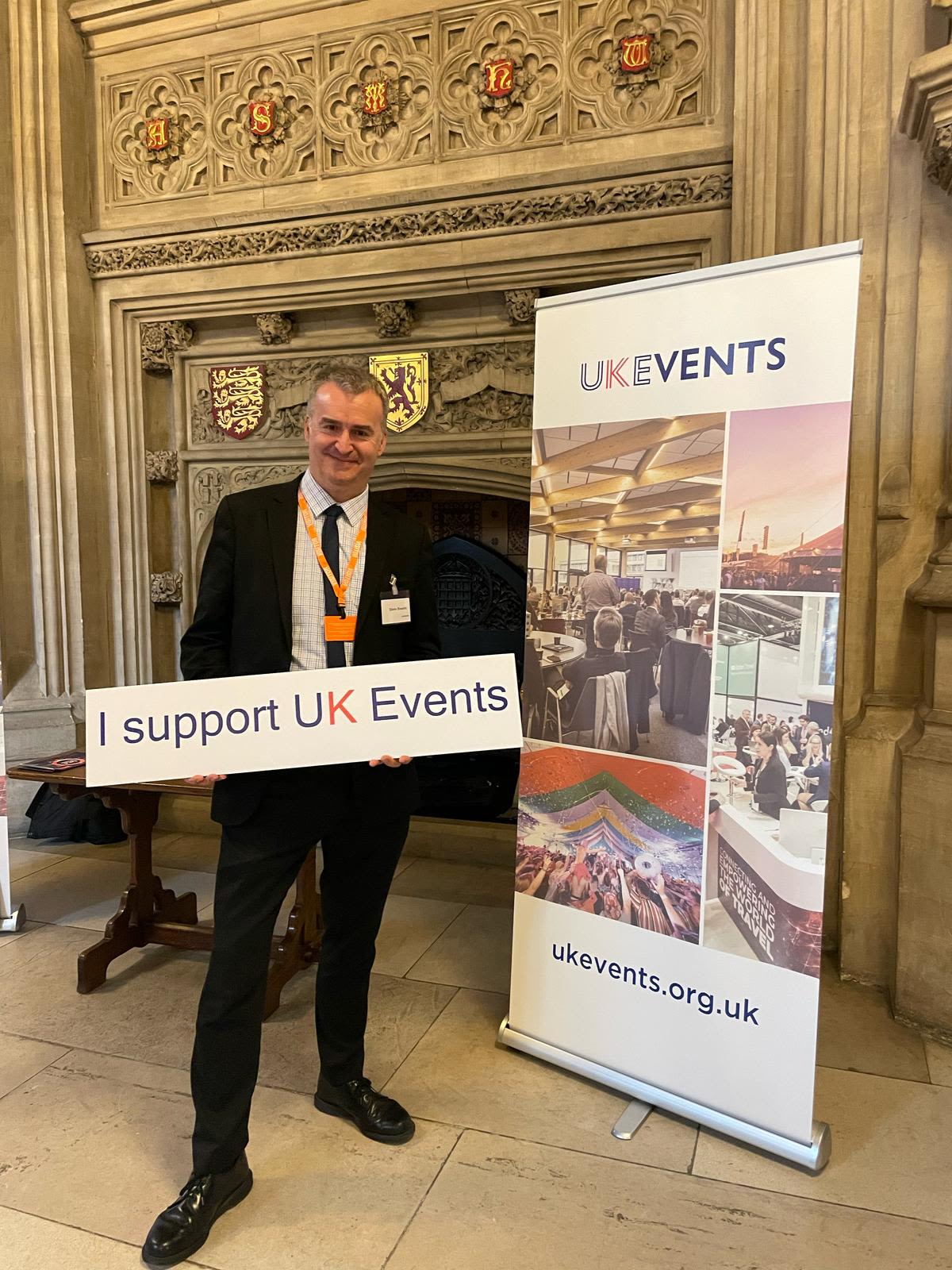




Bowdin took over as chair of UKEVENTS at the beginning of the year, and he sums up the body’s purpose in one sentence: “We exist to support the industry by being its voice, its connector, and its advocate.”
The organisation brings together 19 trade bodies and associations from across the events ecosystem, everything from conferences and exhibitions to outdoor events and business meetings. “We’re not here to replace what our partners do,” Bowdin stresses. “We’re here to add value, amplify their efforts, and create a collective platform.”
That means working closely with government departments like DCMS, engaging with politicians including the All-Party Parliamentary Group (APPG) for events, and supporting campaigns that matter to members, such as lobbying for easier movement of goods post-Brexit, tackling skills shortages, and improving sustainability across the sector.
The big priority
Ask Bowdin what’s top of his to-do list, and his answer is immediate: “A national event strategy, or at least a strategic approach that brings everything together.”
Right now, Scotland has an event strategy. Wales has one. Northern Ireland is working on theirs. But the UK as a whole? Not yet. And that, Bowdin argues, is a missed opportunity.
“A strategy would give us recognition at government level, which is crucial,” he explains. “It would help align funding, support workforce development, and make it easier to integrate events into economic and industrial policy. At the moment, we’re doing a lot of good work, but it’s fragmented.”
So, what would a national event strategy actually do? For one, it would create visibility. “Events would be seen as a key part of the UK economy, not an afterthought,” Bowdin explains. It would also make it easier to unlock funding because, as he puts it, “when there’s a strategy, it’s easier to make the case for investment.”
A strategy would also help develop skills and talent by setting out clear workforce plans and education pathways, ensuring the industry attracts and retains the right people. Perhaps most importantly, it would highlight the true value of events beyond the economic impact. “Events aren’t just about making money; they bring communities together, drive trade, and build cultural capital,” Bowdin says.
The data problem
One of the biggest barriers to government recognition is a longtime bugbear of the industry: the lack of a Standard Industrial Classification (SIC) code for events. Without it, the industry is practically invisible in official statistics.
“Right now, if you try to find out the economic value of the events sector using government data, you can’t, because we’re lumped in with other industries,” Bowdin explains. “That makes it harder to argue for support or policy changes.”
There’s been progress on occupational classifications (event managers now have their own SOC code), but industry-wide data is still patchy. “Data is power,” Bowdin says. “If we can’t show our size and impact, we can’t influence policy effectively. That’s another reason why a national strategy is so important, it would give us the mandate to fix this.”
Despite these challenges, Bowdin is optimistic. “If you look at the government’s recent industrial strategy, events are mentioned throughout; not just under culture, but in tourism, professional services, and trade. That tells me they’re starting to understand that events aren’t just parties, they’re serious economic drivers.”
High-profile events like COP summits and G7 meetings have helped, too. “When world leaders are sitting in a room because of an event, it shows the power of what we do.”
The professionalisation of events
Bowdin has been in the industry long enough to notice a big shift in how events are managed. “We’ve matured enormously. The focus on sustainability, safety, diversity and inclusion, and accessibility is so much stronger now. We’re not just delivering events, we’re delivering impact.”
That professionalism makes advocacy easier. “When you can show that your industry has standards, codes of practice, and qualifications, it changes the conversation with government. It’s no longer ‘nice to have’, it’s essential infrastructure.”
One of Bowdin’s recurring themes is talent. “We lost a lot of people during Covid. Some left the industry entirely. Attracting and retaining talent is now one of our biggest challenges.”
He helped establish the Association for Events Management Education (AEME) over 20 years ago, and the reason is simple: “Events management is an applied subject. If we’re going to develop the next generation, we need to make sure education and industry are working hand in hand, supported by research.”
The pandemic disrupted career pathways, making it harder for young people to attend events, get hands-on experience, and to consider the events industry. Initiatives like the Power of Events’ schools engagement programme are trying to change that, and Bowdin is all for it. “We need to show young people what’s possible, because events isn’t just a job, it’s a career.”
Universities remain a key route into the industry and for upskilling through postgraduate study, but alternative pathways like apprenticeships are growing too. “It’s about choice,” Bowdin says. “Not everyone wants to go to university. What matters is that we’re creating entry points and showing that events is a professional, dynamic industry.”
That’s where initiatives like The Power of Events come in, and Bowdin is keen to see more partnerships between schools, universities, and employers. “If you’re 16 and thinking about your career, you might not even know events is an option. We need to change that narrative.
“Once graduates and others enter the industry, the challenge then is providing clear career pathways and development opportunities, so that we retain talent in the industry. Industry associations and other bodies have a range of initiatives and awards already underway to help support this.”


What’s next?
For Bowdin, the next 12 months are about three things: pushing forward on a national strategy, improving industry data, and strengthening partnerships across the sector.
But he’s realistic. “This isn’t going to happen overnight. It’s about building momentum, getting government departments on board, and showing that we’re not just asking for something, we’re offering solutions.”
His message to the industry? “Get involved. Whether it’s through your trade association, the APPG, or initiatives like Power of Events, make your voice heard. The more united we are, the more influence we have.”
For Bowdin, the opportunity to gain recognition, influence policy, and shape the future has never been greater, but it requires collective effort.
“I’m optimistic,” Bowdin says. “We’ve come a long way, and the momentum is there. If we harness it, there’s no limit to what we can achieve.”