A focus on cultural
intelligence can transform event outcomes. Whether considering the culture of a
business or workforce, its power to effect lasting change can prove a game
changer. And for event organisers, innovative and surprising Dubai could help
Business consultant Peter Drucker famously observed that “culture eats strategy for breakfast”. In a complicated and uncertain world, the importance of an organisation’s culture has, arguably, never been more relevant. Research consistently shows that
employees who feel connected to their organisation’s culture are four
times more likely to be engaged at work and nearly six times more likely to recommend their workplace to others (Forbes).
Attracting talent and retaining staff provide key competitive advantages for companies in today’s marketplace.
How a
company’s culture affects its business goals
 The beautiful buildings in Al Fahidi
“Your (
company’s) culture will have an impact on how well employees collaborate with each other, approach solutions for clients and share a powerful sense of teamwork,” says Rodney Williams, Director of Talent Management at Atwell, a full-service
consulting, engineering and construction services firm across the US. “When you have a culture that values doing work you’re proud of, taking care of employees and supporting clients, you’re encouraging passion, integrity, the freedom to grow and
evolve. This spurs innovation and ignites passion into your role, which leads to high quality work, which leads to profitable projects.”
Event planners have a real opportunity to assist their clients by actively engaging with culture management. Assessing, aligning and transforming an organisation’s culture in an increasingly complex environment is difficult. But cultural challenges can
be met with a proactive, strategic approach.
Business events are frequently an organisation’s most important networking platform. Not only do they provide opportunities for brand exposure, customer engagement and industry advancement, but conferences, trade shows, product launches and incentive
programmes are all essential tools for businesses to showcase their latest innovations, connect with potential clients and stay competitive in their industries.
The power of
cultural intelligence
Organisations that invest in resilient, adaptable cultures are best equipped to navigate change and emerge stronger.
“People who are unable to recognise and understand cultural differences can find themselves in situations that lead to conflict and frustration,” says New Cultural Frontiers. “The practice of cultural intelligence helps people overcome these barriers
by fostering awareness and empathy with others. Understanding the role of culture in a person’s life is vital to achieving success in the workplace.”
Businesses are increasingly recognising the importance of supporting and encouraging cultural intelligence in its staff. In any global enterprise, improving cultural intelligence helps to build stronger relationships, navigate complex problems and improve
interactions with others.
Understanding cultural nuances is essential for success in today’s interconnected world. By appreciating how culture shapes business practices, companies can build stronger relationships, avoid misunderstandings and create meaningful collaborations.
Your choice of event destination can help. Here we examine how the “creative adrenaline” and multicultural nature of Dubai could make it the ideal backdrop.
Harnessing the
opportunity and “full-throttle spectacle” of Dubai
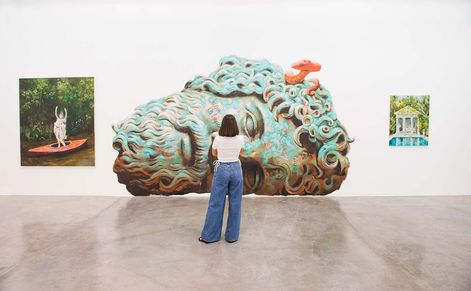 Collaborative space Alserkal Avenue showcasing art in Dubai
“Now is the time for the industry to take a serious look at the UAE”, said Robert
Kenward, Fitability® Recruiter and founder at Jigsaw Talent Solutions recently in M&IT. “In the last year alone, I’ve seen a flurry of agencies land or relaunch in the UAE.
“The pace is intense. One client I spoke to got a call on Monday: ‘We’ve got £10 million for an event. We’d like His Highness to sign it off on Thursday.’ That’s a 72-hour turnaround for a £10 million project. Try getting that urgency - or that trust
- anywhere else.”
He cites vision, ambition and money as the root of its success. “While the US is busy pushing people out, the UAE is rolling out the red carpet,” he says. “The region offers something that’s in short supply in the UK and US right now: opportunity and
excitement.
“It’s a dream for creatives. You’ve got budget, scale and an audience of hundreds of thousands. It’s full-throttle spectacle; think drones and water features in the desert, and of course, budgets that make your jaw drop.
“If you’re in the events or brand experience industry, now is the time to take a serious look. The UAE is injecting itself with creative adrenaline. They want talent. They’re willing to pay for it. And they’re building some of the most
ambitious projects on the planet.
“If you’re an agency leader, it’s time to get your foot in the door, as the region is craving creativity and impact. The streets might not be paved with gold, but they’re definitely open for business.”
The economic heart of the Middle East and North Africa, with unmatched connectivity, liberal visa laws and an extraordinary 150,000 hotel rooms, Dubai is a melting pot of almost 200 nationalities. Renowned for the variety and quality of its food, iconic
architecture and experiences, it consistently ranks as the number one business events destination in the Middle East. Dubai has a track record for delivering excellence.
Kenward’s right when he talks about the excitement that the destination generates.
The city offers an incredible infrastructure for events but what is really exhilarating here is the appetite for innovation, knowledge sharing, professional development and networking. A continued focus on diversifying the economy and an understanding
of the importance of innovation, Dubai is investing and leading the way in growing the sectors and industries of the future.
From healthcare and education to space and renewable energy, Dubai is an ideal events destination for any organisation wanting to understand the latest developments and create paths for growth and sustainability. The city also provides unrivalled access
to and from key emerging markets, enabling associations and companies to tap into and attract new audiences, expand their membership and deliver their expertise to underserved regions such as Africa, South Asia and Asia Pacific.
Hosting COP28 in 2023 and the development of one of the world’s largest solar farms, Dubai is committed to sustainability. Hotels across Dubai have been set strict environmental requirements, the Dubai Can movement is phasing out single use plastic and
rooftop solar panels and collaborations with food banks at Dubai World Trade Centre mean organisers can be sure of the venue’s sustainability credentials. DMCs and PCOs are keen to collaborate with planners to minimise the carbon footprints of their
events.
A uniquely
multicultural society
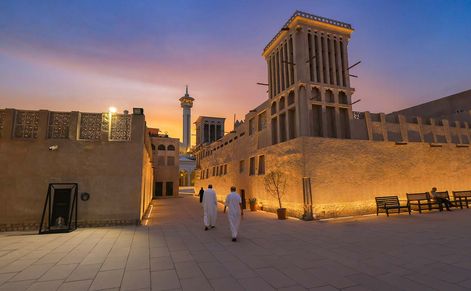 The open-air Al Shindagha Museum
Dubai’s cultural identity is a tapestry woven from the tribes that settled from the prehistoric era to the expats that have settled here since. A multitude of nationalities, traditions, customs and faiths coexist in what has evolved
into a uniquely tolerant and multicultural society,
At its core, Dubai remains a city where the wonder of Arabia lives on. The city’s towering skyscrapers stand alongside the domes and minarets of majestic mosques; the air carries the aroma of exotic spices, herbs and oud. Dubai’s culture is firmly rooted
in the Islamic traditions of acceptance, hospitality and community.
A creative
landscape
With nearly 200 nationalities calling this cosmopolitan city home, Dubai’s cultural landscape is a vibrant Arabian metropolis. A testament to its commitment to cultural enrichment, the city is now a global centre for culture and the arts. With galleries,
museums and events across the city, successes like Art Dubai and collaborative spaces such as Alserkal Avenue have significantly contributed to Dubai’s artistic growth.
The Al Fahidi Historical Neighbourhood dates back to the end of the 19th century and is where Dubai’s first traders settled. Painstakingly restored buildings are now home to art galleries, boutiques, museums and cafés. Explore the winding pedestrian
lanes and admire what many bill as the real architectural jewels of the city – the wind towers. Close by, delegates and participants can develop a greater understanding of Dubai’s customs and traditions at the Sheikh Mohammed bin Rashid Al Maktoum
Centre for Cultural Understanding. Here, visitors are encouraged to ask questions to learn about the local culture.
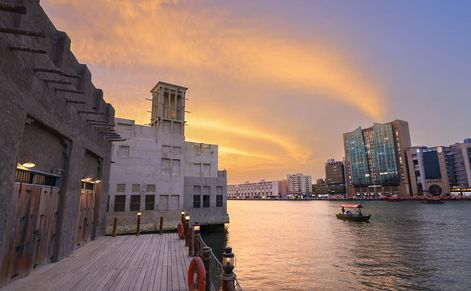 Dubai Creek
The open-air Al Shindagha Museum guides visitors through the city’s dramatic development with a state-of-the-art multimedia experience. Learn about pearl diving and Bedouin life.
In November the city will host ICOM Dubai 25, a flagship event that brings together museum professionals from around the world to engage in dialogue on the most pressing issues facing the sector. It will also be the first city in the Middle East, Africa and South Asia to organise this prestigious
international event since ICOM’s establishment in 1946.
This inspirational, multicultural, peaceful and vibrant city offers visitors extraordinarily magical and memorable experiences while providing a glimpse of an exciting and harmonious future. And its focus on innovation and excellence could help build
a culture of excellence for clients and their customers and staff.
For more information on Dubai Business Events, click here